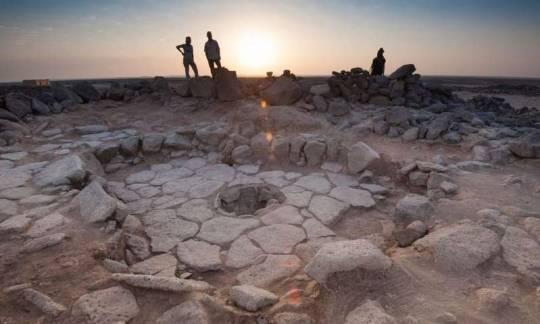
At an archaeological site in northeastern Jordan, researchers have discovered the charred remains of a flatbread baked by hunter-gatherers 14,400 years ago. It is the oldest direct evidence of bread found to date, predating the advent of agriculture by at least 4,000 years. The findings suggest that bread production based on wild cereals may have encouraged hunter-gatherers to cultivate cereals, and thus contributed to the agricultural revolution in the Neolithic period.
A team of researchers from the University of Copenhagen, University College London and University of Cambridge have analysed charred food remains from a 14,400-year-old Natufian hunter-gatherer site—a site known as Shubayqa 1 located in the Black Desert in northeastern Jordan. The results, which are published today in the journal Proceedings of the National Academy of Sciences, provide the earliest empirical evidence for the production of bread:
“The presence of hundreds of charred food remains in the fireplaces from Shubayqa 1 is an exceptional find, and it has given us the chance to characterize 14,000-year-old food practices. Read more.

 House of Brat