There’s a lot of good planetary aspects from now until early October, so I don’t think Philip will pass before Eugenie’s wedding. Perhaps after the wedding in late October.
I haven’t exactly taken another look at that again. But if someone else is for sure saying he’s going to pass in October, then I would go for late October, not early October on that.
I have not seen that one yet, but then I haven’t exactly had the time.
I don’t believe Philip will pass before Eugenie’s wedding though. There’s a lot of positive energy happening before her wedding. Perhaps sometime after the wedding though.
Actually, having a degree isn’t a specific requirement to become a foreign service officer. State Department leaves that door open. It’s statistically unlikely that someone would become a foreign service officer without one though.
Older people who perhaps have careers where they have gained significant professional experience without a bachelors or masters degree are the only ones I can think of that would likely fit the bill of getting into the foreign service without some sort of post-secondary education. Post-secondary education is not a requirement, but that doesn’t mean it’s likely for those without it to enter the foreign service. Also, the hiring process for the US foreign service is long, say a year on the short end of an estimate. Not something that someone generally waits around at home for a call back.
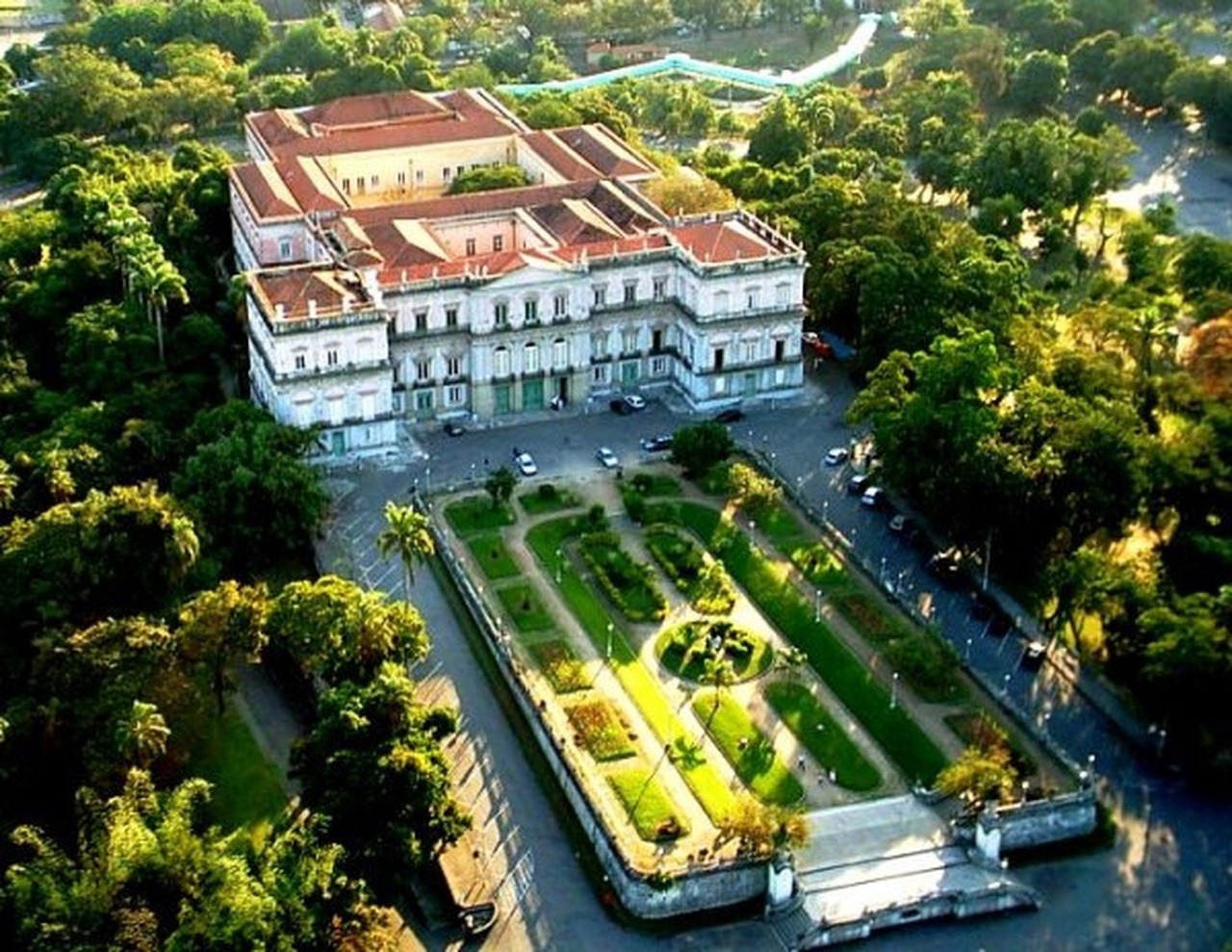
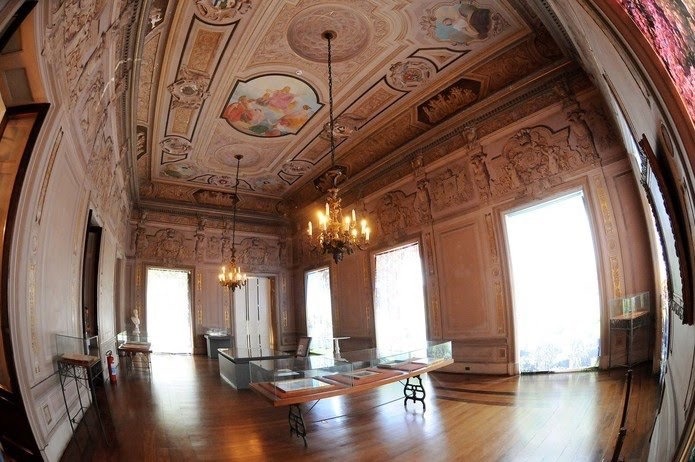
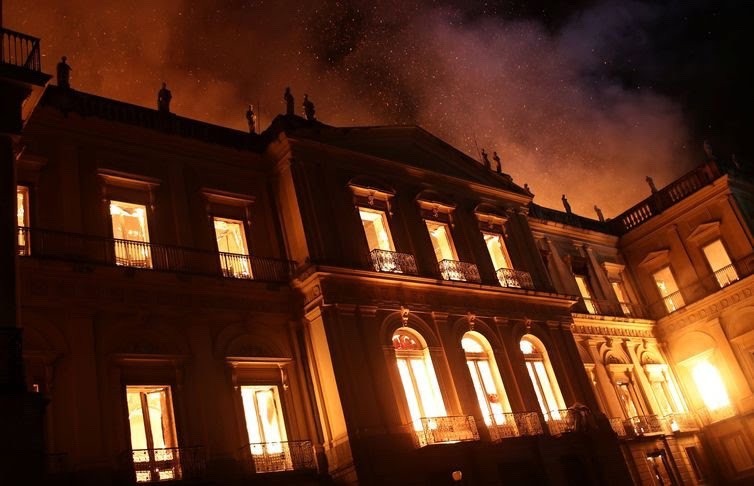
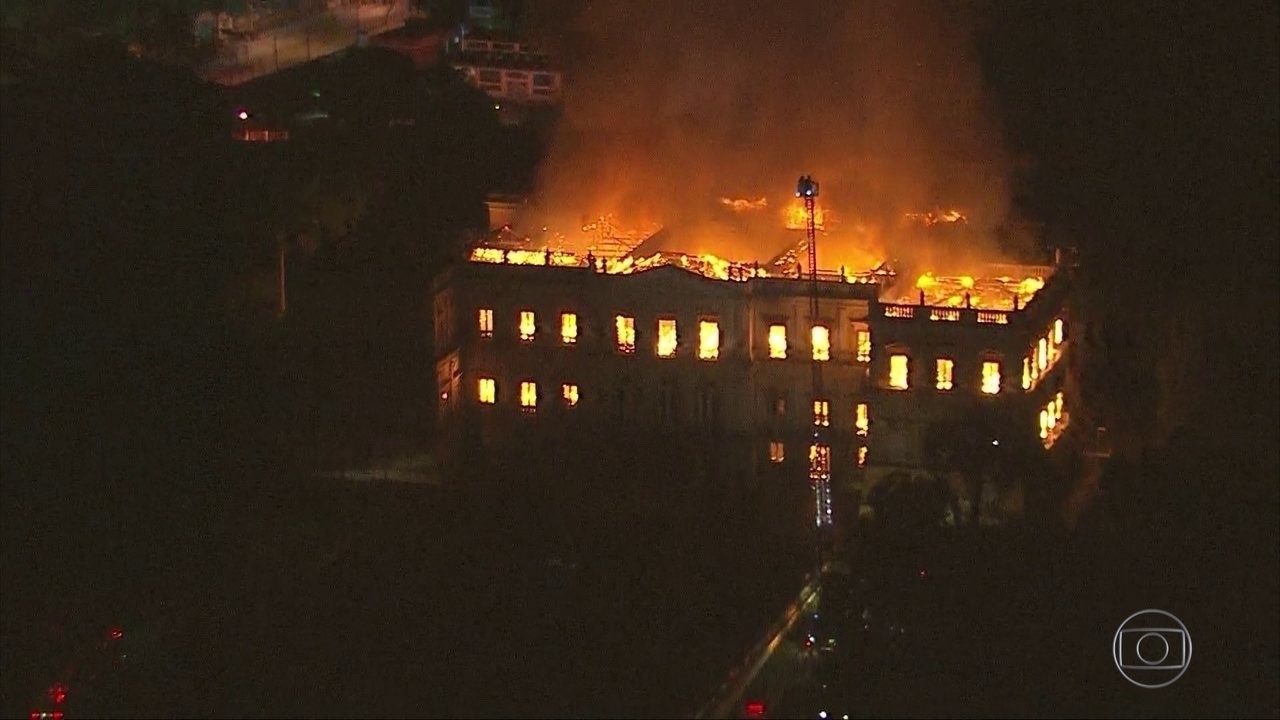
one of the oldest and arguably the most important museum in Brazil is burning to the ground as we speak. home to the portuguese royal family from 1808 to 1821, the Museu Nacional stored fossils, meteorites, pre-historic human skeletons and a variety of artefacts related to natural history. it holds two centuries of latin & brazilian history and now it’s all gone.
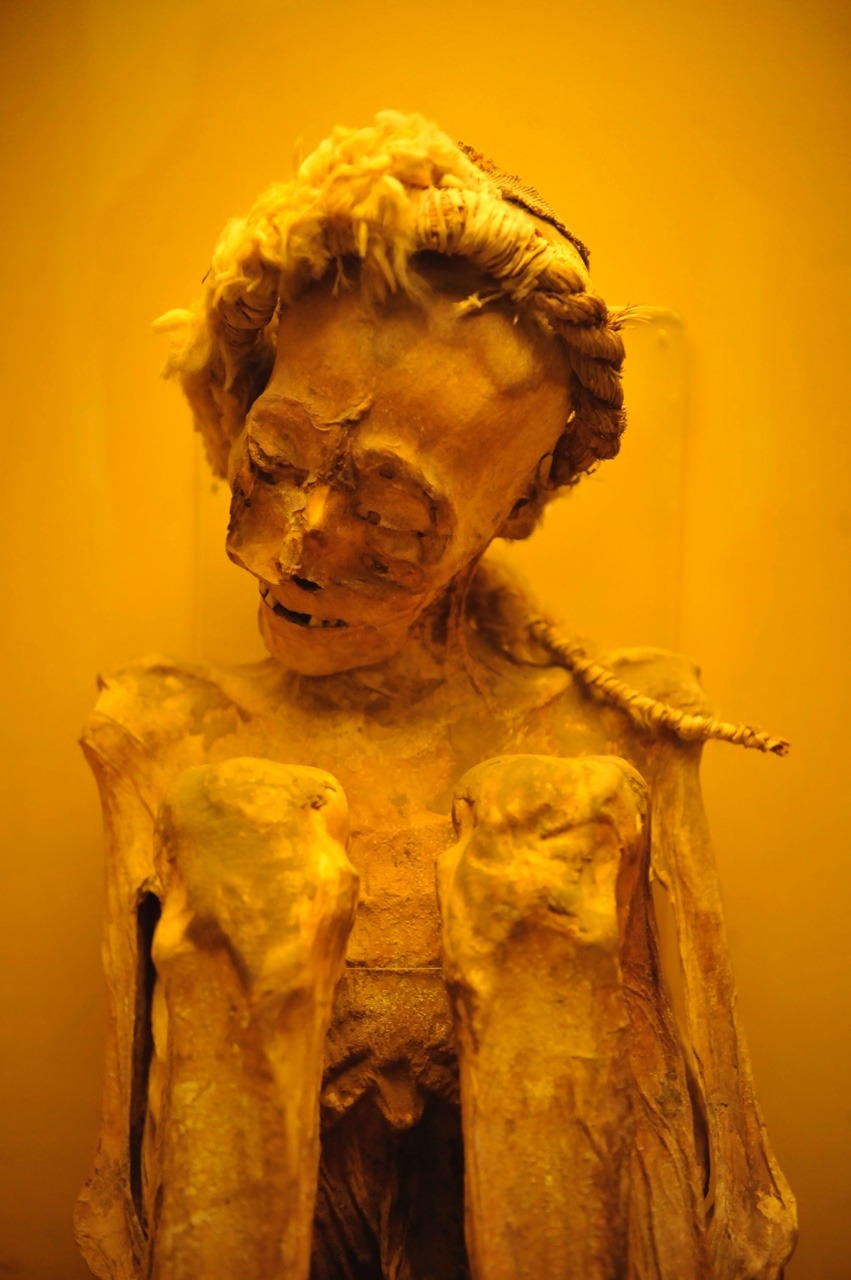
some of the things that are now lost forever: the largest collection of egyptian artefacts in latin america; the skeleton of the largest flying reptile ever found in Brazil; the oldest human fossil ever found in the country, named “Luzia” (over 11.000 y.o) and other 20 million extremely important relics and researches just burned to the ground. never to be seen again.
thanks to our government, of course, who didn’t want to pay the museum the necessary funds to make the essencial maintenances since 2014 (which by the way, costed less than a supreme federal court judge’s sallary: R$520 in a year).
another sad instance where the state’s indifference towards culture and history becomes painfully obvious. this is a massive blow to our cultural legacy.
all that in our independe week. happy independe for us, brazilians, who just lost our history and culture in a fire caused by ignorance and indifference.
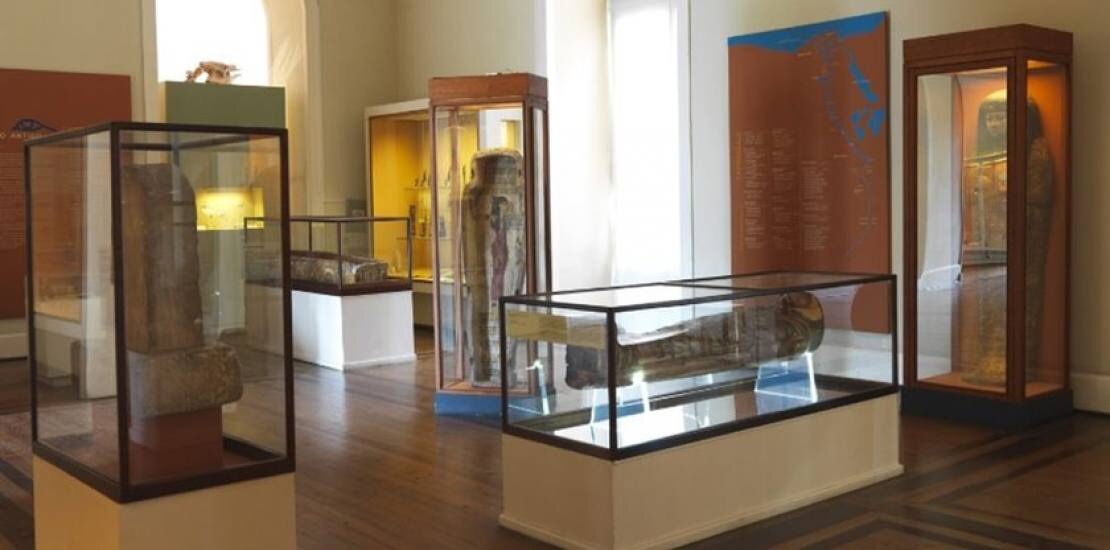
in case you’re wondering, this is what the museum used to look like:
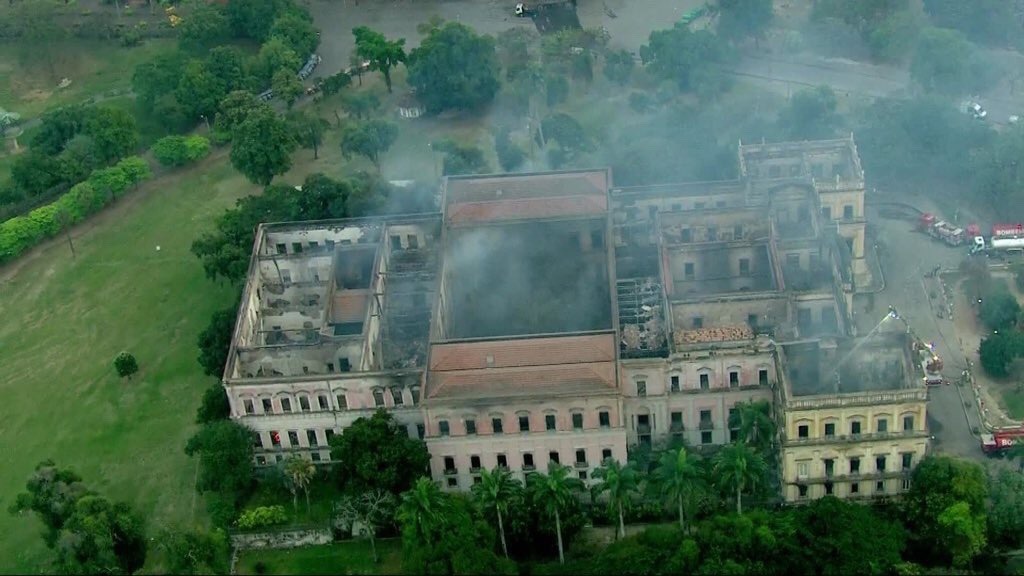
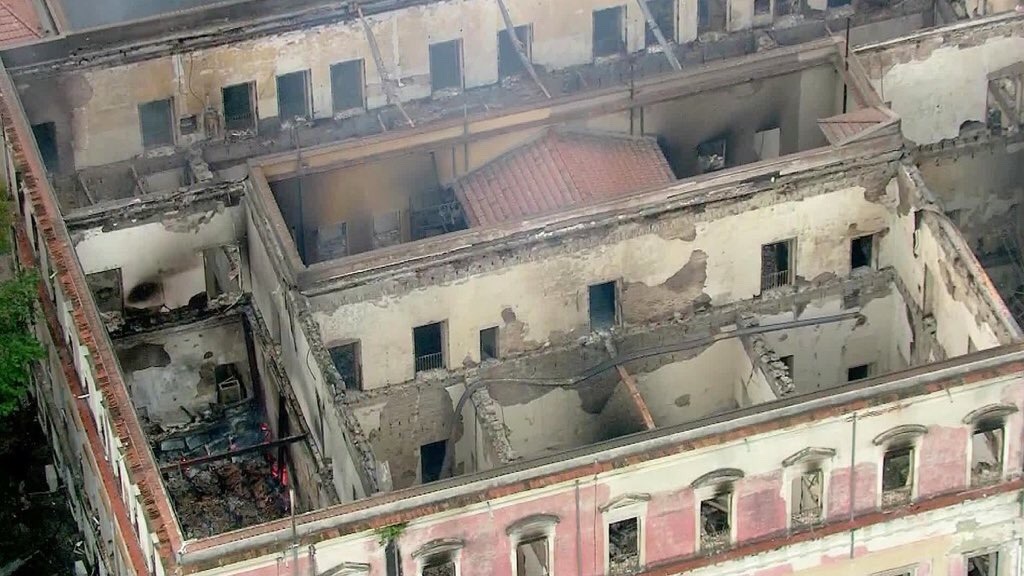
this is what it looks like now:
thousands of years of culture lost. happy independence week.
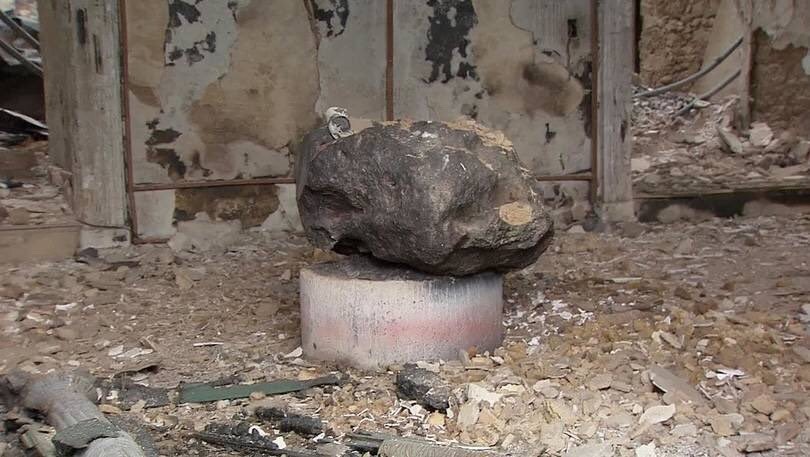
“Authorities say the fire lasted for six hours, causing irreparable damage. To put it bluntly: it’s all gone. A meteorite, that can sustain incredibly high temperatures, was found intact. But other than that, there are apparently no other pieces left. It would not be an understatement to call the Museu Nacional the Brazilian equivalent of the Louvre or the British Museum.”
here is some of the international news saying on this, because most articles and videos are all in portuguese, u can check some of the news in english: (here *new york times*) (here *bbc news*) (here *le monde* for french speaking readers) (here *shorouk news* for people who speak arabian) (here *azteca news* for spanish) (here *corriere della sera* for italian).
it was a natural science and historic museum, there were all sorts of important researches and relics. all burned. this was our culture. our history. the first human fossil found in brazil (mentioned above, Luzia) was so important for science, since it proved that way before indigenous tribes existed in Brazil, there were black people.
this is the place where our first constitution was made and the declaration of independence was signed. our independe day is this friday. heartbroken.
Watching everything that has happened since the engagement, I can only conclude that Meghan is completely oblivious to the negative PR and public opinion. In her mind, she was separated from the royals at birth and has now finally been reconnected to the family she never had. She has to makeup for 36 years of bling and clothes she didn’t get.
But stepping back and taking a broader perspective: there is so much corruption within the higher levels of government, corporations, media, etc. these days. Everyone is a fake on the make. The so called “liberal” media in the “free” world has been dead for several years.
Corporate media is full of gushing articles on Meghan. The Daily Mail and possibly Yahoo are the last two places where the public can still express an opinion on a larg(er) scale. (For comparison, I comment a lot of Financial Time, but a really hot topic gets only a few hundred comments compared to DM thousands). Google search will not bring up blogs anymore unless you already know of the existence of the blog. Twitter, fb, etc. are not places where you can get reasonable analysis of anything.
I’ve seen for myself that in the biggest bank’s headquarters, senior executives are only concerned with hanging on to their paychecks. Every decision they make hinges on that one objective. Apart from a small number of entrepreneurs (and even many of those eventually sell out), you have to hustle your way up the hierarchy if you want to recognized as a mover and a shaker.
Face it, Meghan is a small fraud compared to Lloyd Blankfein or Jamie Dimon, or even the Clintons with their pay-to-play schemes through the State Department. No, I am not a Trump supporter, I am a Julian Assange supporter and I was a Sanders supporter ….long live the liberal media for exposing all the shenanigans around the democratic nomination. Said nobody ever.
Corporate media is composed of craven journalists also attached like limpets to their paycheques, They spew whatever narrative is required. I’ve seen “news reports” that have entire chunks cut and pasted from press releases. The media’s job is to protect institutional elites.
75% (?) of the public buy every narrative they are fed, whether it is about the War on “Terrorism” or Meghan Markle “modernizing the monarchy”. Just look at the all the photos of European royalty playing dressup in their silly gowns, crowns and sashes
….fakes on the make, the whole lot of them.
Thanks for sending this in! I love the FT comment section and it’s so depressing that it’s only a handful of people chiming in. I also follow FinTwitter and a fantastic thread will get maybe 32 RTs, which is also sad.
The fakery is everywhere nowadays, which is downright scary. One reason I blog about Meghan is that it’s less stressful than commenting on Trump or Elon Musk or any of the other fraudsters. Meghan has little effect on my real life, my country, or its economy. The other have a huge influence.
And the press is useless. I can sort of see why the royals get this worshipful pap because they are so secretive and finding real info is hard. I don’t understand it as to the other fraudsters. it reminds me of Chuck Price’s legendary 2007 quote “as long as the music is playing, you’ve got to get up and dance.” It’s good while it lasts, but eventually the music stops and the whole house of cards comes down.
626 was designed to be a monster. But now, there’s nothing to destroy. You see, I never gave him a greater purpose. What must it be like — to have nothing? Not even memories to visit in the middle of the night.
When I was a little girl, my mama used to lock me in the attic when I was bad, which was pretty often. And I would- I would pretend I was a princess… trapped in a tower by a wicked queen. And then suddenly this knight… on a white horse with these colours flying would come charging up and draw his sword. And I would wave. And he would climb up the tower and rescue me. But never in all the time… that I had this dream did the knight say to me, “Come on, baby, I’ll put you up in a great condo.”
That’s a good point, but I was thinking more in terms of her promo, which she is very serious and practical about. It’s interesting that she’s focusing on Australia (OMG, I just realized that the dog is supposedly named Oz, LOLOLOLOL). Instead of building up a charitable credit.
On the other hand, it was depressing to see how little you actually had to do to get the “humanitarian” label, so it shouldn’t surprise me that she feels she can skimp on the charity stuff. She got people to call her a humanitarian with little effort, but she’s been unsuccessful in attaining the coveted “fashion icon” label, no matter how hard she tries.
September 15 will mark the tenth anniversary
of the collapse of Lehman Brothers and near
meltdown of Wall Street, followed by the Great Recession.
Since hitting bottom in 2009, the economy has grown steadily, the stock market has soared, and corporate profits have ballooned.
But most Americans are still living in the shadow
of the Great Recession. More have jobs, to be sure. But they haven’t seen any rise
in their wages, adjusted for inflation.
Many are worse off due to the escalating costs of
housing, healthcare, and education. And the value of whatever assets
they own is less than in 2007.
Last year, about 40 percent of American families
struggled to meet at least one basic need – food, health care, housing or
utilities, according to an Urban Institute survey.
All of which suggests we’re
careening toward the same sort of crash we had in 2008, and possibly as bad as 1929.
Clear away the financial rubble from
those two former crashes and you’d see they both followed upon widening imbalances between the capacity of most people to buy, and what they as workers could
produce. Each of these imbalances finally tipped the economy over.
The same imbalance has
been growing again. The richest 1 percent of Americans now takes home about 20 percent of total income, and owns over 40 percent of the nation’s wealth.
These are close to the peaks of 1928 and 2007.
The U.S. economy crashes
when it becomes too top heavy because the economy depends on consumer spending
to keep it going, yet the rich don’t spend nearly as much of their income as
the middle class and the poor.
For a time, the middle
class and poor can keep the economy going nonetheless by borrowing. But, as in 1929 and 2008, debt bubbles eventually burst.
We’re getting dangerously
close. By the first
quarter of this year, household debt was at an all-time high of $13.2 trillion.
Almost 80
percent of Americans are now living paycheck to paycheck. In a recent Federal
Reserve survey, 40 percent of Americans said they wouldn’t be able to pay their
bills if faced with a $400 emergency.
They’ve
managed their debts because interest rates have remained low. But the days of low rates are coming to an end.
The underlying problem isn’t that Americans have been living beyond their means. It’s that their
means haven’t been keeping up with the growing economy. Most gains have gone to
the top.
It was similar
in the years leading up to the crash of 2008. Between 1983 and 2007, household
debt soared while most economic gains went to the top. Had the majority of households
taken home a larger share, they wouldn’t have needed to go so deeply into debt.
Similarly,
between 1913 and 1928, the ratio of personal debt to the total national
economy nearly doubled. As Mariner
Eccles, chairman of the Federal Reserve Board from 1934 to 1948, explained: “As
in a poker game where the chips were concentrated in fewer and fewer hands, the
other fellows could stay in the game only by borrowing.”
Eventually
there were “no more poker chips to be loaned on credit,” Eccles said, and “when
… credit ran out, the game stopped.”
After the
1929 crash, the government invented new ways to boost wages – Social Security,
unemployment insurance, overtime pay, a minimum wage, the requirement that employers
bargain with labor unions, and, finally, a full-employment program called World
War II.
After the
2008 crash, the government bailed out the banks and pumped enough money into
the economy to contain the slide. But apart from the Affordable Care Act, nothing
was done to address the underlying problem of stagnant wages.
Trump and
his Republican enablers are now reversing regulations put in place to stop
Wall Street’s excessively risky lending.
But Trump’s real contributions to
the next crash are his sabotage of the Affordable Care Act, rollback of overtime
pay, burdens on labor organizing, tax reductions for corporations and the
wealthy but not for most workers, cuts in programs for the poor, and proposed cuts in Medicare and
Medicaid – all of which put more stress on the paychecks of most
Americans.
Ten years after Lehman Brothers collapsed,
it’s important to understand that the real root of the Great Recession wasn’t a
banking crisis. It was the growing imbalance between consumer spending and
total output – brought on by stagnant wages and widening inequality.
“The evolution of the film’s color scheme underscores the emergence of Diana’s power…As the film’s plot becomes more violent and Diana gets introduced to the “real world,” a cyan and orange color palette begins to take over.”
My father told me once, he said, “If you see something wrong happening in the world, you can either do nothing, or you can do something.” And I already tried nothing.









 House of Brat