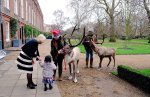
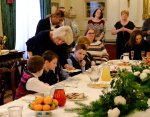
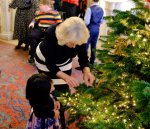
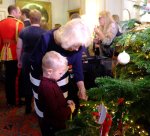
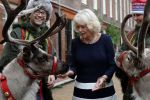
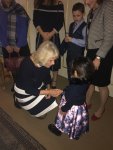
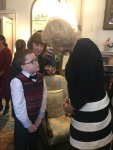
The Duchess of Cornwall, Patron, Helen & Douglas House and Roald Dahl’s Marvellous Children’s Charity, invites children supported by both charities to decorate the Christmas tree and join Her Royal Highness for lunch at Clarence House, London, 06.12.2018
HOW DID I FORGET TO TELL YOU ALL THAT I SAW FIVE DOGS ON THE TRAIN TODAY. FIVE WHOLE DOGS. IT WAS THE BEST DAY OF MY LIFE. THE MAN SITTING NEXT TO ME COULD NOT CARE LESS AND I KEPT LOCKING EYES WITH HIM WHEN I WAS STARING AT THE DOGS AND HE WAS SO IRRITATED WITH ME BUT I DON’T CARE BECAUSE THERE WERE FIVE DOGS
@msamyzing You can only see four of them because one was hidden and I was trying to take the photo without anyone noticing because I’d already made myself look like a total freak by whispering “so many dogs” repeatedly to myself. There’s obviously the lovely one sitting nicely on the right, you can see the tail of another one next to him, the little one, and then my favourite is the one on the far left. If you zoom in you can tell he loves his dog walker!!
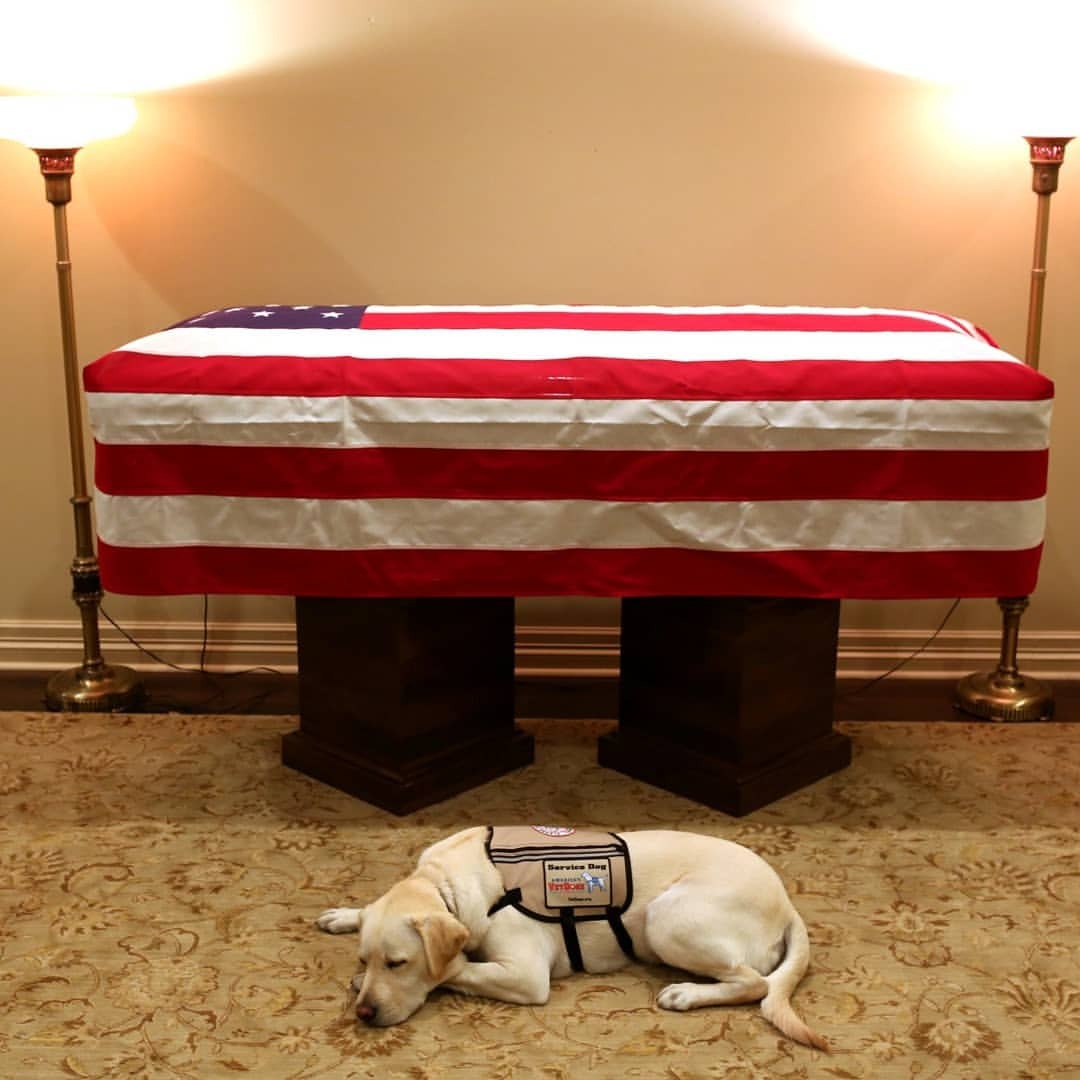
Sully, the service #dog of former President George H.W. #Bush, lays in front of Bush’s casket at the George H. Lewis & Sons funeral home in #Houston. The yellow Labrador Retriever was placed by @americasvetdogs with the 41st #president in June of this year to assist with his daily life. @sullyhwbush’s next assignment will be with Walter Reed National Military Medical Center’s facility dog program. Jim McGrath, a spokesman for the Bush family, tweeted this image with the words “mission complete.” Photo courtesy of the Office of George H. W. Bush/Evan Sisley. #remembering41 #POTUS #georgehwbush (at Houston, Texas) https://www.instagram.com/p/Bq7oRK_A0kt/?utm_source=ig_tumblr_share&igshid=mkq0wm4ddv84
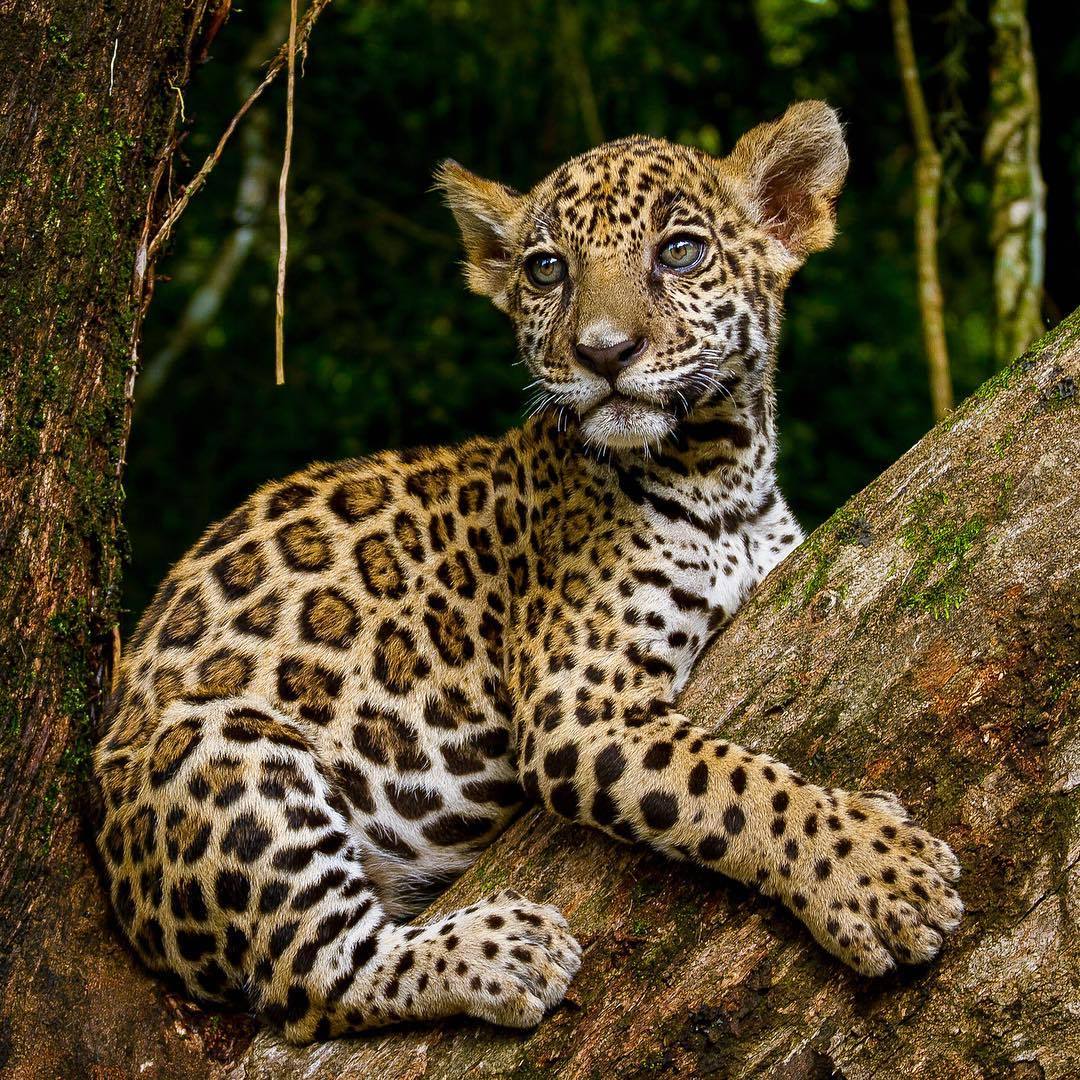
Thursday‘s first-ever International Jaguar Day is an opportunity to reflect on the important conservation efforts underway aimed at guaranteeing the jaguar’s survival.
The jaguar is the third largest big cat in the world, yet 50% of jaguar species have been lost due to human activity, including land clearing for development and agriculture, as well as poaching. Today, 90% of the remaining jaguars live in the Amazon rain forest.
Our colleagues at the United Nations Development Programme are working with governments and local communities in Honduras, Mexico, Peru and Ecuador to conserve the jaguar’s natural habitat and monitor the activities and well-being of the big cats. ⠀⠀⠀⠀⠀⠀⠀⠀⠀⠀⠀ 📷: UNDP Ecuador / Victor Utreras
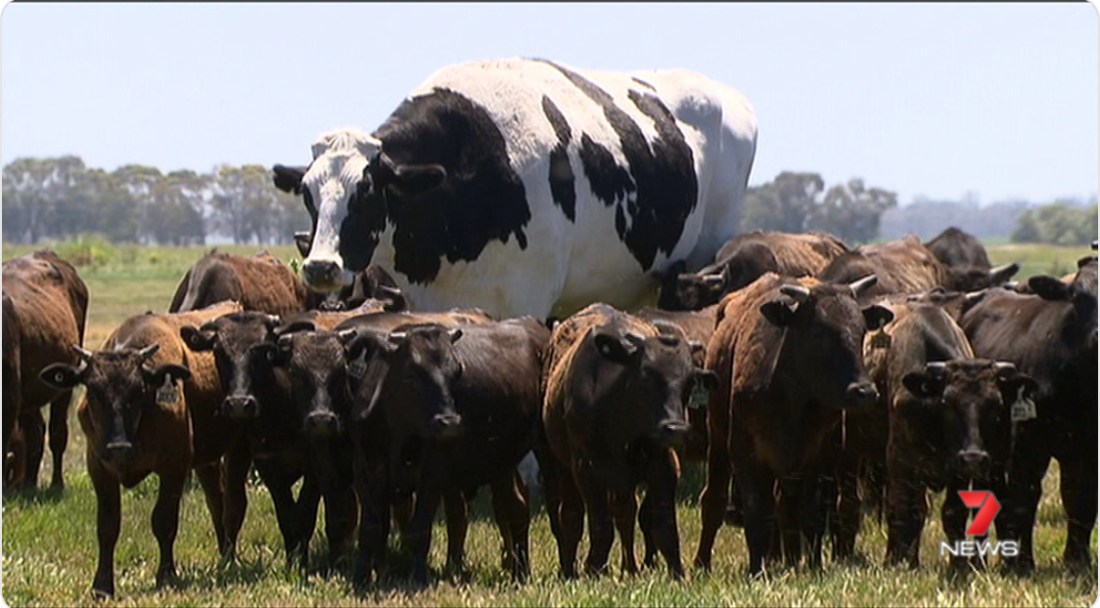
Holy #cow! Knickers, a 7-year-old Holstein Friesian steer who stands at just over 6 feet and weighs more than 3,000 pounds, was saved after he was considered too big to fit in the slaughterhouse, according to #Australian media. Video via Reuters. #australia (at Myalup, Western Australia) https://www.instagram.com/p/BqvreewglV5/?utm_source=ig_tumblr_share&igshid=148wtyqm14lmx
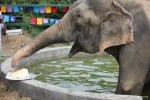
Raju the elephant spent over 50 years in India as a tourist attraction. He was beaten by his handlers, forced to “beg” for money from pedestrians, and was bound by painful chains. Elephants are highly evolved in their emotional intelligence, so this life had detrimental effects on Raju’s mental health. Luckily, Wildlife SOS obtained all the required paperwork and staged a covert rescue of Raju last summer. On July 6th Raju celebrated his 1 year anniversary of his freedom. Look how happy he is today, he even got a cake!!
Chloe, the UN Therapy Dog bounds down a corridor to joyously greet a friend.
Since joining the United Nations family in early 2017, Chloe has met hundreds of staff members at UN Headquarters in NYC, helping them deal with stress as part of the animal-assisted therapy service offered by the UN Staff Counsellors’ Office.
Animal-assisted therapy and similar programmes can support Goal 3 of the Sustainable Development Goals on health and well-being. Recent studies find that people with pets see health benefits such as decreased blood pressure and improved immune function.
Far from scary, bats enrich our lives by protecting American forests and agriculture from damaging insect pests and supporting plant pollination. These small creatures have a huge impact, and Bat Week is a great time to share their important contributions and think about what we can do to help them!
The Bureau of Land Management and our partners protect bats by increasing the quality and availability of bat roosting and foraging habitat. The BLM and Bat Conservation International work together to identify abandoned mines that are no longer suitable for mining, conduct surveys to assess bat habitat and population health that provide suitable habitat through bat-friendly mine closures. These closures help protect public safety, while providing habitat for dwindling bat populations.
There are many steps any member of the public can take to protect bats! Here are a few from our friends at Bat Conservation International:
Turn out the lights! Light pollution affects insect populations, disrupts bats as they migrate, and deters sensitive bat species.
Reduce, reuse, recycle! The overwhelming amount of garbage produced each year — hundreds of millions of tons in America alone — is one of the biggest hurdles to a healthy environment for bats and humans.
Learn more about your local habitat and ecological relationships. Read about bats online or attend a Bat Week event.
Help your friends and family understand that bats are beneficial and need our help.
If you can, plant a garden. You’ll have food and flowers, and you’ll attract insects that feed the bats. Consider creating a compost pile to add to the garden, recycle food scraps and attract even more, yummy bat food.
Volunteer! Parks, zoos, nature centers, conservancies, rehabilitation centers, museums, etc., rely on volunteers to help educate visitors, care for animals or take leadership roles. Your time is an invaluable gift.
Bat Week starts today and runs through Wednesday, October 31. This #BatWeek, and every week, the Bureau of Land Management is proud to work with partners to manage and conserve habitat for bats across the nation. Visit blm.gov/bat-week to learn more about the BLM’s bat resources.
UN security dog Taz is pictured here in the General Assembly Hall.
Taz and all of his four-legged colleagues of the United Nations specialized K-9 Unit, are doing a great job checking vehicles, meeting rooms, packages and anything else needed. K-9 Unit dogs are highly trained by UN security officers for the detection of explosives and firearms.
Thanks to our furry colleagues and their handlers for all they do to keep us safe!
























 House of Brat