Isabel Wilkerson, writing for The New York Times, has the definitive review of Michelle Obama’s juggernaut of a book:
One of the great gifts of Obama’s book is her loving and frank bearing-witness to the lived experiences of the black working class, the invisible people who don’t make the evening news and whom not enough of us choose to see. She recreates the dailiness of African-American life – the grass-mowing, bid-whist-playing, double-Dutch-jumping, choir-practicing, waiting-on-the-bus and clock-punching of the ordinary black people who surrounded her growing up. They are the bedrock of a political party that has all too often appeared to take their votes for granted in the party’s seeming wistfulness for their white equivalents (for whom the term “working class” has come to stand in public discourse).
Like many Americans, Obama’s parents made do with what they had and poured their energy into their children, who they hoped would fulfill the families’ as yet unrealized aspirations. The parents bought them a set of Encyclopaedia Britannica and insisted on proper diction. They went on Sunday drives to a richer neighborhood known as Pill Hill (after the number of black doctors living there) in her father’s Buick Electra, looking at houses they could only dream of. Michelle’s father suffered from multiple sclerosis, a degenerative disease, and his beloved Buick gave him mobility that his legs alone could not. He never complained and rarely spoke of his condition, she says, but it was a daily consideration. “Our family was not just punctual,” she writes. “We arrived early to everything.” This was in part to allow time for any contingency, given her father’s declining strength, a habit that instilled in her the value of planning and vigilance in one’s life. Her mother kept their cramped apartment in such good order that years later Obama would remember how it smelled: “It’s because of my mother that still to this day I catch the scent of Pine-Sol and automatically feel better about life”…
We see her father’s diminishing health and his uncompromising work ethic. At one point, he used a motorized scooter to get from boiler to boiler. “In 26 years, he hadn’t missed a single shift,” she writes. We feel her heartbreak as she loses her father to the disease he refused to let define him. By then, Obama was a grown woman, grieving and even more appreciative of her parents’ sacrifices for her sake. Her parents had never taken trips to the beach or gone out to dinner. They didn’t own a house until Aunt Robbie bequeathed them hers when Michelle was halfway through college. “We were their investment, me and Craig,” she writes. “Everything went into us.”
It also includes a tidy capsule of her and Barack’s unusual, unlikely-yet-inevitable courtship:
How their office relationship turned into a quick-moving romance that summer, how the box-checking pragmatist warmed to the loose-limbed free spirit, is a delight to read, even though, or perhaps because, we know the outcome. His cerebral intensity was clear from the start. One night, soon after they had become a couple, she woke to find him staring at the ceiling, apparently troubled. She wondered if their new relationship was on his mind, or perhaps the death of his father. “‘Hey, what are you thinking about over there?’ I whispered. He turned to look at me, his smile a little sheepish. ‘Oh,’ he said. ‘I was just thinking about income inequality.’”
He struck her as a visionary with no material interests. The first time she visited him in Cambridge during the long-distance phase of their young relationship, he picked her up in a “snub-nosed, banana-yellow Datsun” with a “four-inch hole in the floor” and a tendency to spasm “violently before settling into a loud, sustained juddering.” She knew then that “life with Barack would never be dull,” she writes. “It would be some version of banana yellow and slightly hair-raising.”
And her lack of interest in politics:
After a series of unlikely events, among them scandals forcing one opponent after another to drop out of the race, Barack won. Michelle, against the advice of a veteran Senate wife, chose not to move their family to Washington. “None of this had been my choice in the first place,” she writes of the stress of being a politician’s wife and managing a household while her husband commuted from the capital when he could. “I didn’t care about the politics per se, but I didn’t want to screw it up.” When Barack began mulling a run for the White House and consulting trusted advisers, “there was one conversation he avoided having,” she writes, “and that was with me. He knew, of course, how I felt.”
This was where their temperaments and upbringing were at odds. She wanted the kind of family stability she had grown up with. “Barack had always had his eyes on some far-off horizon, on his notion of the world as it should be,” she writes. “Just for once, I wanted him to be content with life as it was.” By then, they had been through five campaigns in 11 years. “Each one had put a little dent in my soul and also in our marriage,” she writes. Bottom line: She didn’t want him to run for president, especially not then. They talked about it over and over. She agreed to support him, she writes, because “I loved him and had faith in what he could do.” Speaking in London in early December, she was more candid, saying “deep down” she believed “there’s no way he’s going to win. And we can just sort of get this out of the way. … That was my whole plan.”
Funny story! Barack Obama won the nomination and then the Presidency, becoming the first black President of the United States and winning two terms, thrusting Michelle into a role she never wanted but seemed to be made for.
As a young girl, she had modest aspirations: a family, a dog and “a house that had stairs in it – two floors for one family.” She had grown up in a 900-square-foot attic apartment. Now, at the end of Inauguration Day, she was the first lady, moving into a home with “132 rooms, 35 bathrooms and 28 fireplaces spread out over six floors,” and a staff of ushers, florists, housekeepers, butlers and attendants for her every need. Three military valets oversaw the president’s closet. “You see how neat I am now?” he said to her one day. She had seen, she said, smiling back, “and you get no credit for any of it.”
It’s a shame that Michelle dislikes politics so much. I think if she chose, she could be an even better President than her husband. And I liked him a lot.
2018 was the year that tsundoku entered our cultural vocabulary. It’s a Japanese word that doesn’t translate cleanly into English but it basically means you buy books and let them pile up unread. The end-of-the-year book lists coming out right now won’t help any of us with our tsundoku problems, but there are worse things in life than having too many books around. I took at look at a bunch of these lists and picked out some of the best book recommendations for 2018 from book editors, voracious readers, and retailers. Let’s dig in.
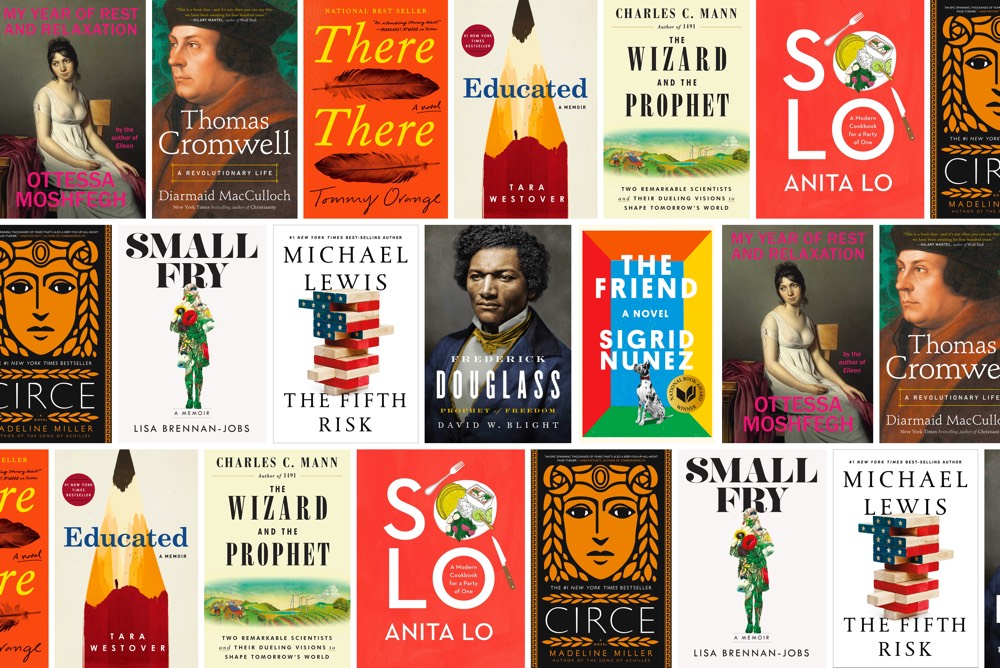
I am delighted to see Lisa Brennan-Jobs’ memoir Small Fry on the Times’ top 10 list as well. I’m gonna have more to say about this in an upcoming post, but in an era where we’re re-evaluating the importance of the personal conduct and personalities of the people running massive tech and media companies, this book did not get the attention it deserved, particularly in the tech press.
Amazon’s editors selected Tara Westover’s Educated as their top book of the year. Also on the list is Tommy Orange’s There There, which appears on many other lists as well. Amazon’s This Year in Books is also worth a look…it is definitely not the critic’s view of what we read: the most-sold fiction book was Ready Player One and the most-sold nonfiction book was Michael Wolf’s book about Trump, Fire and Fury.
For The Guardian’s Best Books of 2018, a group of authors including Hilary Mantel, Chris Ware, and Yuval Noah Harari share their top picks of the year. Mantel, the author of an excellent pair of books on Thomas Cromwell (Wolf Hall and Bring Up the Bodies) recommends Diarmaid MacCulloch’s biography of Cromwell, who was Henry the VIII’s chief minister, a key figure of the English Reformation. Harari recommends Michael Pollan’s How to Change Your Mind: The New Science of Psychedelics, which also features on a number of other lists. Oh, and Yotam Ottolenghi highlights Lateral Cooking by Niki Segnit, a cookbook “designed to help creative cooks develop their own recipes”.
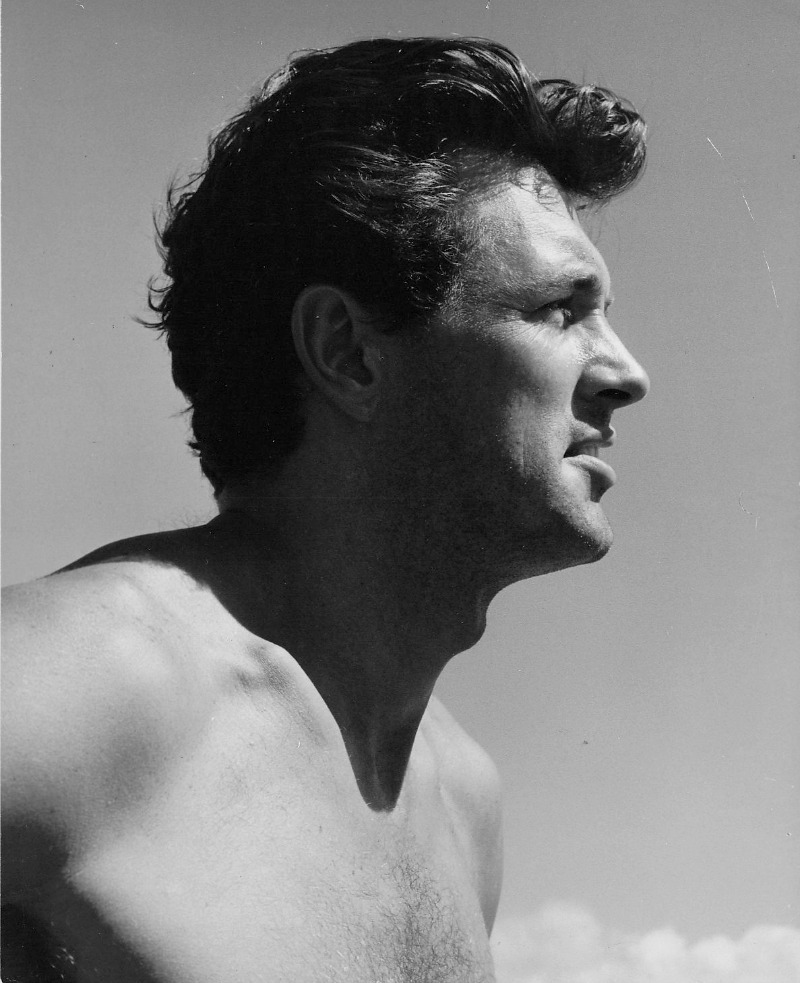
Rock Hudson lived a double life as a Hollywood heartthrob and a closeted gay man. He was a leading man in the 50’s and 60s, known as “The Beefcake.” Off screen, in his public life, he had to play the part of a heterosexual—or else his career would have been ruined. Biographer Mark Griffin says Hudson’s death from AIDS in 1985 was a turning point in public awareness of the epidemic. “Ironically, he was suddenly the hero of thousands of gay men,” Griffin says.
Oh, Jo. Jo, you have so many extraordinary gifts; how can you expect to lead an ordinary life? You’re ready to go out and – and find a good use for your talent. Tho’ I don’t know what I shall do without my Jo. Go, and embrace your liberty. And see what wonderful things come of it
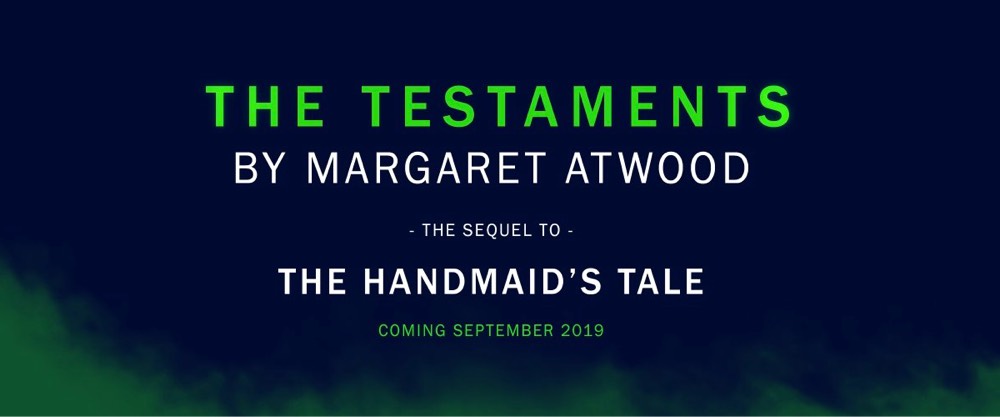
On Twitter this morning, Margaret Atwood revealed that she’s writing a sequel to her 1985 dystopian novel The Handmaid’s Tale, inspired in part by “the world we’ve been living in”. According to the pre-order page on Amazon, The Testaments takes place 15 years after the events of the first book and is narrated by three women from Gilead. We’ll have to wait a bit though…the book is due out in early September 2019.
In the meantime, season 3 of the the TV series has started production and will likely debut next spring.
WHOOOO IT’S COMING TOMORROW!!! The NPR Book Concierge goes live at 5am, so get ready to nerd out about more than 300 great books, hand-picked for you by our staffers and critics! (You can find it at npr.org/bestbooks, though that won’t point to this year’s edition until 5am on Tuesday the 27th.) Happy reading!
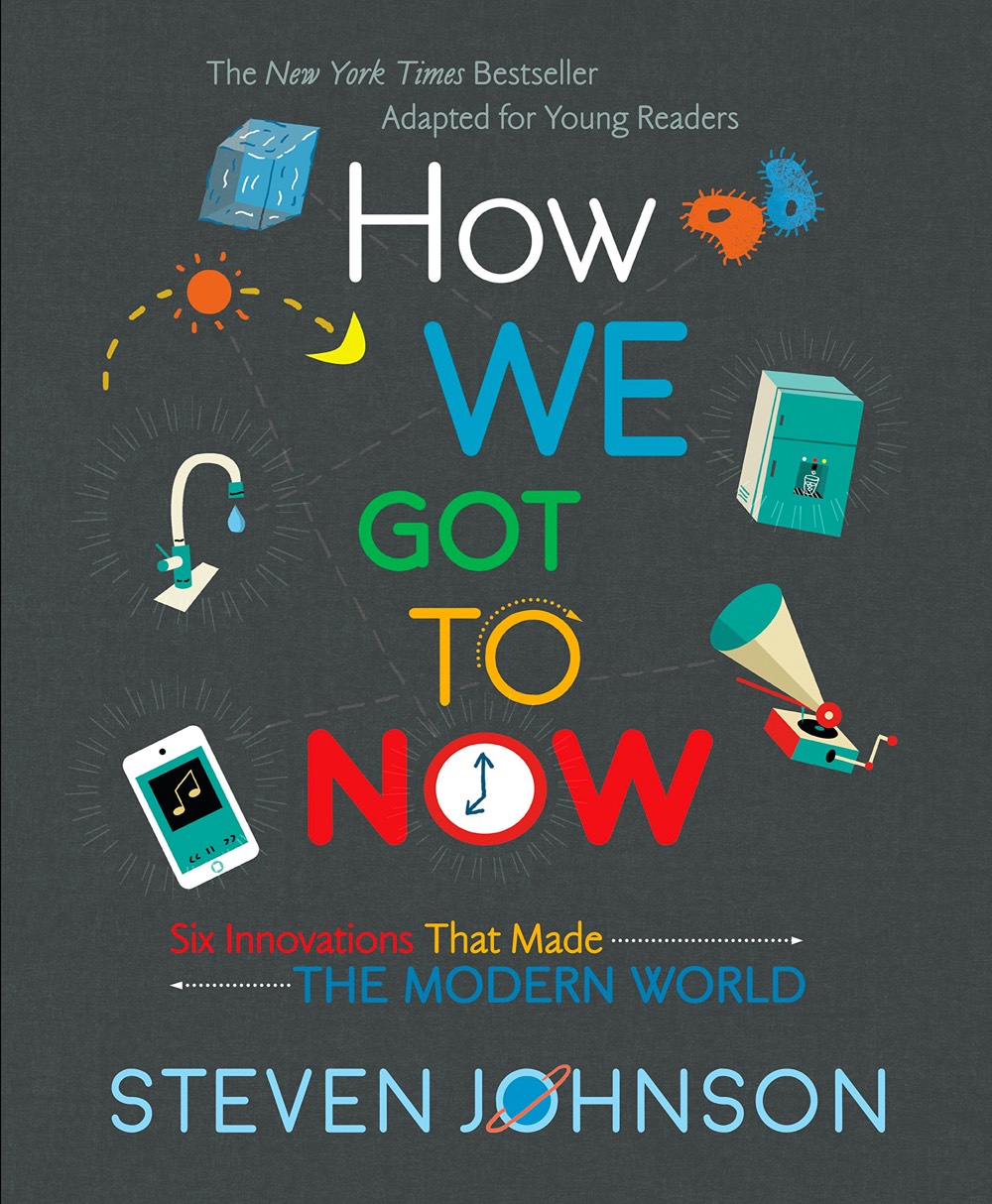
His fascinating account is organized into six topics: glass, cold, sound, clean, time, light. Johnson’s fresh exploration of these simple, single-syllable word concepts creates an endlessly absorbing story that moves from lightning strikes in the prehistoric desert to the herculean effort to literally raise up the city of Chicago to laser labs straight out of a sci-fi movie.
Totally getting this for my kids for Christmas. (Kids, if you’re reading this, act surprised, ok?)
Billionaire filmmaker Howard Hughes has long been regarded as one of Hollywood’s most eccentric and prolific playboys. A few years back, writer and film critic Karina Longworth stumbled onto an online message board, listing women Hughes had had sexual relationships with – just a list of names, no other information.
“In each of these names there’s a whole life and a whole story,” says Longworth, who hosts the film podcast You Must Remember This.
Longworth’s new book, Seduction: Sex, Lies and Stardom in Howard Hughes’s Hollywood, tells a story of big-screen exploitation by focusing on 10 women who had relationships with Hughes.
In some instances, Longworth says, Hughes “was getting studio contracts for women based on a sexual relationship they had already had or the promise of a sexual relationship to come.”
Longworth sees a direct link between Hughes’ behavior and the issues raised by the #MeToo movement.
“The thing that I’ve come to understand from studying the 20th century of Hollywood is that these things have always happened and they were never talked about publicly,” she says. “Just the fact that we’re having a conversation is completely revolutionary.”
Barack had always felt a special fondness for Queen Elizabeth, saying that she reminded him of his no-nonsense grandmother, Toot. I personally was awed by her efficiency, a skill clearly forged by necessity over a lifetime in the public eye. One day a few years earlier, Barack and I had stood, hosting a receiving line together with her and Prince Philip. I’d watched, bemused, as the Queen managed to whisk people speedily past with economic, friendly hellos that left no room for follow-up conversation, while Barack projected an amiable looseness, almost inviting chitchat and then ponderously answering people’s questions, thereby messing up the flow of the line. All these years after meeting the guy, I was still trying to get him to hurry up.
One afternoon in April 2016, the two of us took a helicopter from the American ambassador’s residence in London to Windsor Castle in the countryside west of the city. Our advance team instructed us that the Queen and Prince Philip were planning to meet us when we landed and then personally drive us back to the castle for lunch. As was always the case, we were briefed on the protocol ahead of time. We’d greet the royals formally before getting into their vehicle to make the short drive. I’d sit in the front next to ninety-four-year-old Prince Philip, who would drive, and Barack would sit next to the Queen in the backseat.
It would be the first time in more than eight years that the two of us had been driven by anyone other than a Secret Service agent, or ridden in a car together without agents. This seemed to matter to our security teams, the same way the protocol mattered to the advance teams, who fretted endlessly over our movements and interactions, making sure that every last little thing looked right and went smoothly.
After we’d touched down in a field on the palace grounds and said our hellos, however, the Queen abruptly threw a wrench into everything by gesturing for me to join her in the backseat of the Range Rover. I froze, trying to remember if anyone had prepped me for this scenario, whether it was more polite to go along with it or to insist that Barack take his proper seat by her side.
The Queen immediately picked up on my hesitation. And was having none of it.
“Did they give you some rule about this?” she said, dismissing all the fuss with a wave of her hand. “That’s rubbish. Sit wherever you want.”
Theory makes you desire mastery: you hope that theoretical reading will give you the concepts to organize and understand the phenomena that concern you. But theory makes mastery impossible, not only because there is always more to know, but, more specifically and more painfully, because theory is itself the questioning of presumed results and the assumptions on which they are based. The nature of theory is to undo, through a contesting of premisses and postulates, what you thought you knew, so the effects of theory are not predictable. You have not become master, but neither are you where you were before. You reflect on your reading in new ways. You have different questions to ask and a better sense of the implications of the questions you put to works you read.
Jonathan Culler, Literary Theory: A Very Short Introduction (via ecrituria)
‘Let the People See’ is a timely book about the fragility of collective memory and about the courage and persistence of journalists — particularly black journalists — some of whom risked their lives in 1955 to get the facts of the Emmett Till story before the public. Most of all though, ‘Let the People See’ is a vivid reminder of just how easy it is for people not to see things they’d rather not see.
Book critic Maureen Corrigan, reviewing Let The People See, about Emmett Till’s murder and legacy (via nprfreshair)
The novel “Everything Under,” which has been short-listed for this year’s Man Booker Prize, remixes several fairy tales, and lingers on the dark old themes of starvation and feasting, domestic violence, and abandonment.
When author and illustrator Jarrett J. Krosoczka was in the fourth grade, his grandparents called him into the living room. “I remember thinking: Oh maybe we’re going to go on another family vacation,” he says. (The last time they called a family meeting he learned they were going to Disney World.)
But this wasn’t that kind of family meeting. Krosoczka’s grandparents had insisted on taking legal custody of him as a toddler — and they were about to tell him why.
“My grandfather sat me down on the couch,” Krosoczka recalls. “And he said: ‘It’s time we tell you the truth about your mother. She’s in jail and she’s a drug addict and that’s why she’s been gone all this time.’ ”
Krosoczka had seen his mother only sporadically since age 2. He had never met his father.
Throughout his childhood, Krosoczka kept this painful information hidden. “I didn’t tell anybody for the longest time …” he says. “When you have these addictions in your families, you sort of live this duality. You have this thing that you hold back from people and you put your best face forward.”
Krosoczka wasn’t an athletic or social kid. Drawing was his refuge, his way of making friends, and his way of dealing with life. “Maybe that’s [where] my storytelling skills began,” he says. “By my making up excuses for where my biological parents were.”
As an adult, Krosoczka became a graphic novelist — publishing books for young readers such as the “Lunch Lady” and the “Platypus Police Squad” series. He considered writing about his own life, but worried his story was too dark.
It wasn’t until he began meeting young fans with similar life stories that he changed his mind. Krosoczka’s new book Hey, Kiddo, tells the story of his mother’s addiction and incarceration from the point of view of his 17-year-old self.
“It took a long time for me to gain that courage to make this book …” he says. “I feel like I owe it to these readers to put myself out there.”
“It’s hard to make time for history books when there is so much history crashing down on us every single day — and especially when that history is divisive, aggressive and seemingly never-ending,” says NPR’s Congressional correspondent Scott Detrow.
Case in point: This book review was due a week ago. Rather than finish this assignment, I spent the week in Senate hallways and hearing rooms, watching in real time as the most contentious Supreme Court confirmation in a generation turned into a national flashpoint on sexual assault and gender politics.
Luckily, he says, three of America’s most prominent and accessible historians are here to help us put everything in context – check out his full roundup here.
– Petra
Rape culture… is a term that really tries to connect the dots between an American society that turns this blind eye to sexual assault and the true experience of girls, which is that they are experiencing a lot of sexual assault. So this rape culture is a culture where there are rape myths – that a woman’s outfit or her alcohol consumption has caused her rape – and nobody questions these attitudes that box in the victim. It doesn’t matter that you were dressed a certain way, or it doesn’t matter how much you drank. … So what we really see among this young generation is this refusal to participate in that culture, and also very differently than the ‘90s, when I was in college, back then … what we were taught is carry mace, go to a self-defense class, protect yourself because ‘boys will be boys,’ and the best you can do is make sure that you’re safe on your own. These girls are saying, ‘No! It’s not our problem, it’s YOUR problem. It’s boys that have to change. It’s the institutions that have to change.’ This is about institutional accountability.
In previous political eras, women like these would have been told to hold their tongues or act more ladylike. These days, however, we are being encouraged, at least in some quarters, to embrace our anger. A slew of new books are challenging the ancient notion that rage can be dangerous for both self and society, arguing instead that women’s anger is, as the respective subtitles of these books insist, their “power,” their “revolutionary power,” even their “superpower.”
After consulting dozens of authors, critics, and voracious readers, Vulture has come up with A Premature Attempt at the 21st Century Canon, aka a list of the 100 most important books of the 21st century (so far).
Any project like this is arbitrary, and ours is no exception. But the time frame is not quite as random as it may seem. The aughts and teens represent a fairly coherent cultural period, stretching from the eerie decadence of pre-9/11 America to the presidency of Donald Trump. This mini-era packed in the political, social, and cultural shifts of the average century, while following the arc of an epic narrative (perhaps a tragedy, though we pray for a happier sequel).
This week, Penguin Random House announced changes in their e-book lending terms. Alan Inouye of the ALA Washinigton Office discusses the changes and next steps for libraries.
President Obama is heading to Africa this week for the first time since he left office. In preparation, he shared a recommended summer reading list that’s heavy on African authors. Here’s the full list:
Things Fall Apart by Chinua Achebe
A true classic of world literature, this novel paints a picture of traditional society wrestling with the arrival of foreign influence, from Christian missionaries to British colonialism. A masterpiece that has inspired generations of writers in Nigeria, across Africa, and around the world.
A Grain of Wheat by Ngugi wa Thiong’o
A chronicle of the events leading up to Kenya’s independence, and a compelling story of how the transformative events of history weigh on individual lives and relationships.
Long Walk to Freedom by Nelson Mandela
Mandela’s life was one of the epic stories of the 20th century. This definitive memoir traces the arc of his life from a small village, to his years as a revolutionary, to his long imprisonment, and ultimately his ascension to unifying President, leader, and global icon. Essential reading for anyone who wants to understand history – and then go out and change it.
Americanah by Chimamanda Ngozi Adichie
From one of the world’s great contemporary writers comes the story of two Nigerians making their way in the U.S. and the UK, raising universal questions of race and belonging, the overseas experience for the African diaspora, and the search for identity and a home.
The Return by Hisham Matar
A beautifully-written memoir that skillfully balances a graceful guide through Libya’s recent history with the author’s dogged quest to find his father who disappeared in Gaddafi’s prisons.
The World As It Is by Ben Rhodes
It’s true, Ben does not have African blood running through his veins. But few others so closely see the world through my eyes like he can. Ben’s one of the few who’ve been with me since that first presidential campaign. His memoir is one of the smartest reflections I’ve seen as to how we approached foreign policy, and one of the most compelling stories I’ve seen about what it’s actually like to serve the American people for eight years in the White House.
Each of us has a deep need to forgive and to be forgiven. After much reflection on the process of forgiveness, Tutu has seen that there are four important steps to healing: Admitting the wrong and acknowledging the harm; Telling one’s story and witnessing the anguish; Asking for forgiveness and granting forgiveness; and renewing or releasing the relationship. Forgiveness is hard work. Sometimes it even feels like an impossible task. But it is only through walking this fourfold path that Tutu says we can free ourselves of the endless and unyielding cycle of pain and retribution.
By some accounts, nearly half of America’s incarcerated population is mentally ill — and journalist Alisa Roth argues that most aren’t getting the treatment they need.
Roth has visited jails in New York, Chicago, Los Angeles and Atlanta and a rural women’s prison in Oklahoma to assess the condition of mentally ill prisoners. She says correctional officers are on the “front lines” of mental health treatment — despite the fact that they lack clinical training.
“Most of [the correctional officers] will talk about how this is not what they signed up,” Roth says. “Most of them have not had much training in dealing with mental illness — or they’ve had none at all.”
Roth witnessed high-risk prisoners in solitary confinement or chained up or wearing restrictive jumpsuits — which tended to exacerbate the prisoners’ distress.
Therapy, when available, was often conducted under stressful conditions. Roth describes one session in the Los Angeles County jail that took place through the slots of a cell door — forcing the prisoner and therapist to yell to be heard.
“The entire [jail] tier can hear everything that you’re saying,” Roth says. “Especially in a place where showing any weakness can be really dangerous … people are particularly unlikely to disclose anything personal or her that would make them vulnerable.”
Roth chronicles her findings in the book, Insane: America’s Criminal Treatment of Mental Illness.
I found out recently that at a time of his life when Tolstoy was in a slump and had stopped writing & earning money, his wife Sophia borrowed money from her mum to start her own publishing office and publish editions of his works—and in order to figure out how publishing worked, she travelled to St Petersburg to ask Anna Dostoyevsky for advice, as Anna had also spent the past 14 years planning the editions of her husband’s work, correcting proofs, placing ads in papers, battling official censors, etc. It reminded me of this post about women writers supporting each other—so many links between women in history that we never hear about. Someone please write a book about the wives of all the great male writers…
(In previous years Sophia, while giving birth to Tolstoy’s 13 children and raising them and managing his estate (he was a count) pretty much on her own, also wrote the clean copies of all of his manuscripts out of his nearly illegible drafts—the final draft of War and Peace was 3,000 pages and she copied it seven times, correcting spelling and grammar and offering key suggestions and critiques of the plot; for example explaining to him that people would be more interested in the social or romantic plots, the human aspects, than in the minutiae of the battles and war strategy plots. A few months before his death, Tolstoy named a male friend the executor of his literary estate rather than his wife, who had been doing this thankless job since she was 19, and gave to the public domain all the copyrights to his works that Sophia had previously owned (for her publishing company). She wrote in her diary “Now I am cast aside as of no further use, although I am, nevertheless, expected to do impossible things.”)
Also I shouldn’t be surprised (but I am) at just how many “great male writers” read their wife’s (or female relatives’) diaries and drew a lot of inspiration from them, stealing ideas or even sometimes entire sentences / paragraphs / poems out of them. This is such a recurrent pattern. There’s Tolstoy (who read Sophia’s diaries and also asked her, when she was 17, to show him a short story she’d written, gave it back to her the next day saying he’d barely glanced at it, when he actually wrote in his diary “What force of truth and simplicity!” and used the story as the embryo for the Rostov family in War and Peace), but also William Wordsworth who read his sister Dorothy’s journal and drew a lot from it, and F. Scott Fitzgerald of course. When Zelda was still young a magazine editor offered to publish parts of her journals, and her husband (of 5 months!) said he couldn’t allow it because he drew a lot of inspiration from them and planned on using parts of them in his future novels and short stories. There’s also French novelist Raymond Radiguet who stole his female lover’s diary to write his novel The Devil in the Flesh, and was lauded by fellow male writers & critics for his brilliant insights into a woman’s mind. Which had been copy/pasted from this woman’s diary. [Also, while he didn’t read it until after her death, Henry James’s sister Alice mentions in her diary that he “embedded in his pages many pearls fallen from my lips, which he steals in the most unblushing way, saying, simply, that he knew they had been said by the family, so it did not matter.”] I really love reading women’s journals, and when they were married to a famous writer, you wouldn’t believe how often the person who edited them mentions in the introduction “if some passages sound familiar it’s because her husband was reading her diary and ~getting inspired” ie plagiarising although the term technically doesn’t apply because every word his wife wrote and idea she had was legally his property (just like she was).
It makes me feel so bitter to contrast what women do—decades of unpaid, unacknowledged work to proofread, copy, publish, preserve from censorship, improve, develop and promote their husband’s writing—with what men do—openly steal ideas and whole sentences from their wife’s writing while forcing her to give birth to 13 children that she didn’t want and he doesn’t help raise.
Patricia Hampl, you had me at your title: The Art of the Wasted Day.
Imagine a book that celebrates daydreaming, that sees it not as a moral failing, but as an activity to be valued as an end in itself. To be clear, this is not a self-help book; nor is Hampl talking about meditation, yogic breathing or mindfulness — those worthy New Age practices that, well, have to be practiced.
Instead, Hampl’s intrigued by the kind of instinctual, floaty, aimless daydreaming that many of us, if we were lucky, indulged in for hours and hours as children. As adults, of course, we feel like we need to have something to show for our time: achievements, chores, to-do list items crossed off.
Our critic Michael Schaub – who would like you to know that he’s from Texas – says Lawrence Wright’s new book about his home state is essential reading, even for non-Texans.
Ronan Farrow just won the Pulitzer Prize for stories he wrote for The New Yorker, but before uncovering sexual assault allegations against Harvey Weinstein for the magazine, he worked at the State Department as a special adviser in the Obama administration.
In War on Peace: The End of Diplomacy and the Decline of American Influence, Farrow writes about his time at the State Department and what he sees as a dangerous whittling away of the agency’s influence through mass firings and efforts to cut its budget.
The idea that Texas will be eternally red I think is a false one. But when it will turn is hard to say. Once it does turn, though, if you take the largest red state and add it to the blue column, the politics of America totally transform.
Not That Bad, an anthology of writing on rape culture, featuring 29 contributors and edited by me. Out 5/1/18. Pre-order now at your preferred book retailer.
Norwegian journalist Åsne Seierstad’s new book follows two sisters from the suburbs of Oslo who fled their family in 2013 for war-torn Syria – and their father’s desperate attempts to find them.



 House of Brat