newyorker:

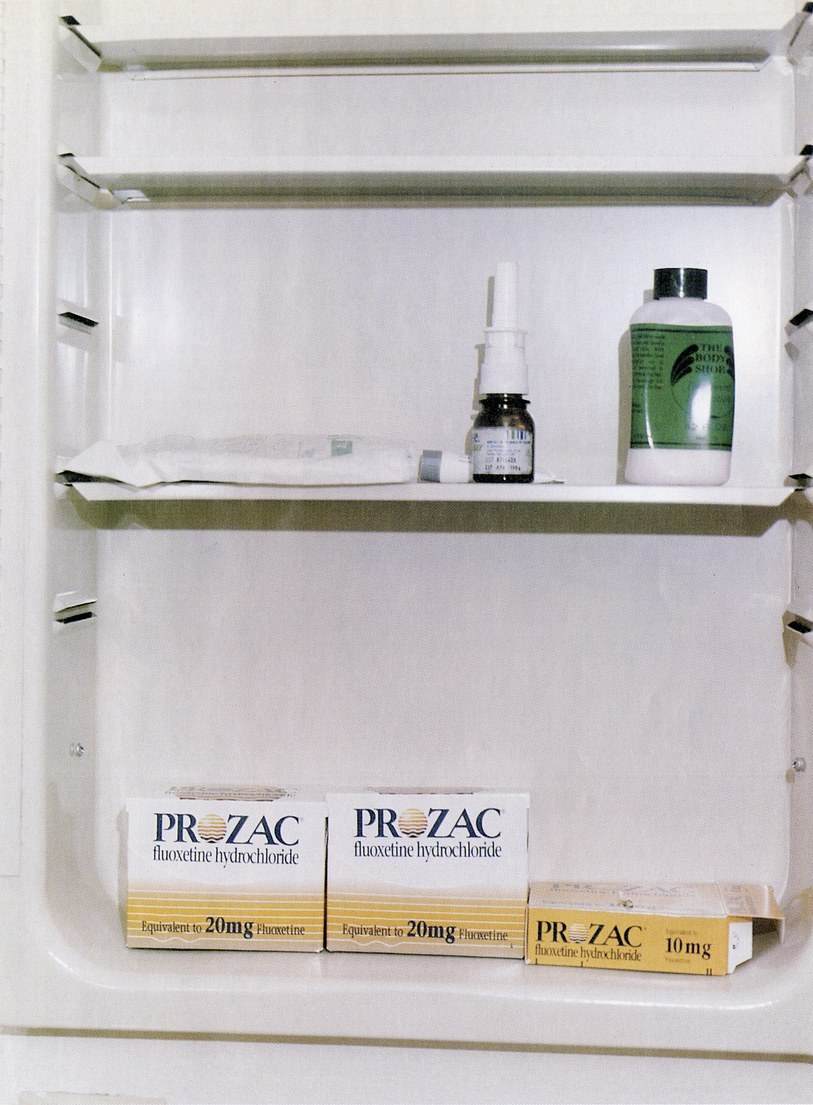
Once upon a time, depression was generally seen as a purely psychological disturbance; these days, people are likely to think of it as a tidy biological syndrome. In fact, it’s hard to make sense of the distinction. Most depressive disorders are now thought to involve a mixture of reactive (so-called neurotic) factors and internal (“endogenous”) factors; depression is seldom a simple genetic disease or a simple response to external troubles. Resolving the biological and the psychological understanding of depression is as difficult as reconciling predestination and free will.

Read the full story, “Anatomy of Melancholy,” here. 

The Death of a Loved One from Opiate Addiction, Plainly & Honestly Told

jkottke:

From an independent newspaper here in Vermont, the heartbreaking and brutally honest obituary of Madelyn Linsenmeir, a 30-year-old mother who died from a drug addiction to opiates that lasted for more a decade.

When she was 16, she moved with her parents from Vermont to Florida to attend a performing arts high school. Soon after she tried OxyContin for the first time at a high school party, and so began a relationship with opiates that would dominate the rest of her life.

It is impossible to capture a person in an obituary, and especially someone whose adult life was largely defined by drug addiction. To some, Maddie was just a junkie – when they saw her addiction, they stopped seeing her. And what a loss for them. Because Maddie was hilarious, and warm, and fearless, and resilient. She could and would talk to anyone, and when you were in her company you wanted to stay. In a system that seems to have hardened itself against addicts and is failing them every day, she befriended and delighted cops, social workers, public defenders and doctors, who advocated for and believed in her ‘til the end. She was adored as a daughter, sister, niece, cousin, friend and mother, and being loved by Madelyn was a constantly astonishing gift.

This is powerfully straightforward writing by Linsenmeir’s family…my condolences are with them. They devoted a few paragraphs at the end of her obit to address addiction and its place in our society:

If you are reading this with judgment, educate yourself about this disease, because that is what it is. It is not a choice or a weakness. And chances are very good that someone you know is struggling with it, and that person needs and deserves your empathy and support.

If you work in one of the many institutions through which addicts often pass – rehabs, hospitals, jails, courts – and treat them with the compassion and respect they deserve, thank you. If instead you see a junkie or thief or liar in front of you rather than a human being in need of help, consider a new profession.

As in many other states, more and more people are dying of opiate overdoses in Vermont even as doctors cut the number of opioid prescriptions they write faster than other areas of the country.

royal-confessions:

“After battling PPD of my own I spoke to other mothers about their experiences. Since I got the courage to speak about it, I found that others where relieved to find out it’s likewise for a lot of mothers. The Duchess’ initiative (‘Heads together’) made me aware of the ‘communication is key’-part and I felt al lot more normal and not so guilty. I wonder if Kate feels/felt the same with any birth and so she started all this.“ – Submitted by Anonymous

nprfreshair:

Behind Bars, Mentally Ill Inmates Are Often Punished For Their Symptoms

By some accounts, nearly half of America’s incarcerated population is mentally ill — and journalist Alisa Roth argues that most aren’t getting the treatment they need.

Roth has visited jails in New York, Chicago, Los Angeles and Atlanta and a rural women’s prison in Oklahoma to assess the condition of mentally ill prisoners. She says correctional officers are on the “front lines” of mental health treatment — despite the fact that they lack clinical training.

“Most of [the correctional officers] will talk about how this is not what they signed up,” Roth says. “Most of them have not had much training in dealing with mental illness — or they’ve had none at all.”

Roth witnessed high-risk prisoners in solitary confinement or chained up or wearing restrictive jumpsuits — which tended to exacerbate the prisoners’ distress.

Therapy, when available, was often conducted under stressful conditions. Roth describes one session in the Los Angeles County jail that took place through the slots of a cell door — forcing the prisoner and therapist to yell to be heard.

“The entire [jail] tier can hear everything that you’re saying,” Roth says. “Especially in a place where showing any weakness can be really dangerous … people are particularly unlikely to disclose anything personal or her that would make them vulnerable.”

Roth chronicles her findings in the book, Insane: America’s Criminal Treatment of Mental Illness.

Photo: Roy Scott/Getty Images/Ikon Images