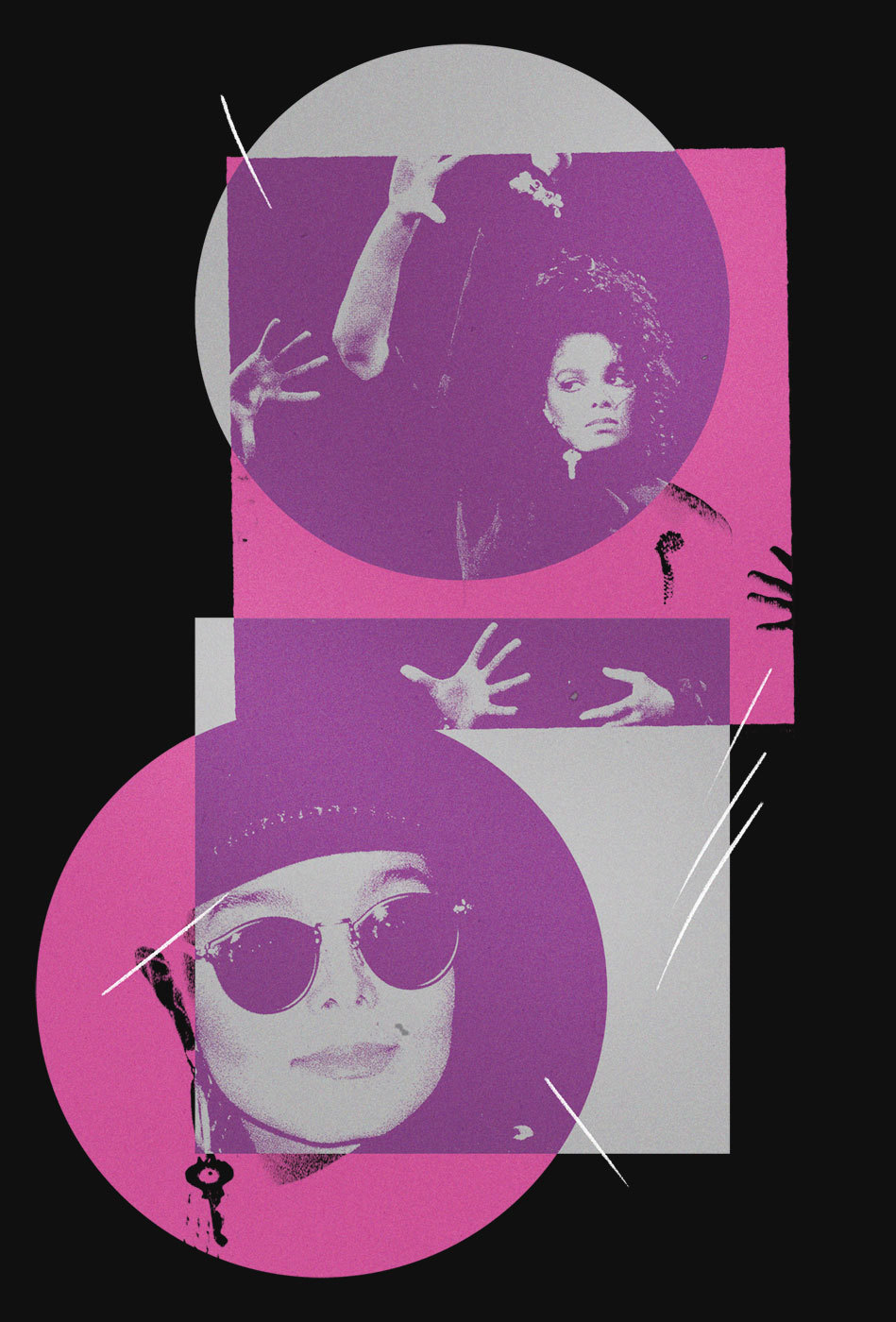
For her 1989 album “Rhythm Nation 1814,” Janet Jackson drew on an already established idea: the dance-based utopia. Lyrically, she was exploring the idea that the right rhythm can intoxicate and control us, and, eventually, unite us as living, breathing, flesh-and-bone humans. The album’s accompanying 30 minute longform music video did just that, with a chair routine that would be imitated for years after.
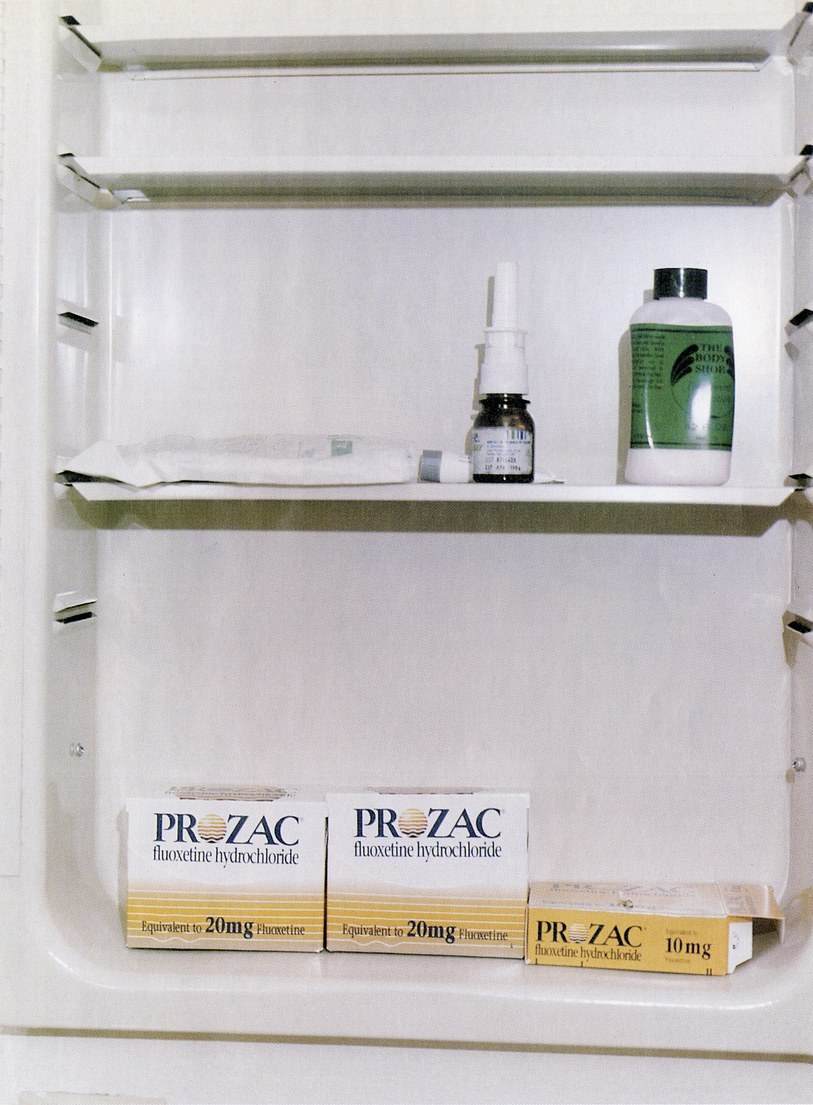
Once upon a time, depression was generally seen as a purely psychological disturbance; these days, people are likely to think of it as a tidy biological syndrome. In fact, it’s hard to make sense of the distinction. Most depressive disorders are now thought to involve a mixture of reactive (so-called neurotic) factors and internal (“endogenous”) factors; depression is seldom a simple genetic disease or a simple response to external troubles. Resolving the biological and the psychological understanding of depression is as difficult as reconciling predestination and free will.
On November 9th, 1959, the Secretary of Health informed the public that a small portion of the cranberry crop from the Pacific Northwest had recently tested positive for the herbicide, which caused abnormal growths in lab rats. He had a message for the consumer (that is, the “housewife”): if she couldn’t determine the origin of her berries, “to be on the safe side, she doesn’t buy.”
A $50 million dollar a year business collapsed overnight.
Perhaps as few as eighty thousand forest elephants remain in the Central African Republic. The story of these declining numbers is also a story of habitat destruction. Where forest elephants exist in an undisturbed state, they build networks of trails through the deep forest. These trails connect mineral deposits, fruit groves, and other essentials of forest-elephant life. In Central Africa, there are dozens of fruit trees whose seeds are too large to pass through the guts of any other animal and for which forest elephants have evolved as the sole dispersers. These trees line the forest-elephant paths. Where elephant populations are disturbed, the paths disappear.
In a media environment saturated with fake news, “synthetic media” technology has disturbing implications.
Last fall, an anonymous Redditor with the username Deepfakes released a software tool kit that allows anyone to make synthetic videos in which a neural network substitutes one person’s face for another’s, while keeping their expressions consistent. Around the same time, “Synthesizing Obama,” a paper published by a research group at the University of Washington, showed that a neural network could create believable videos in which the former President appeared to be saying words that were really spoken by someone else. In a video voiced by Jordan Peele, Obama seems to say that “President Trump is a total and complete dipshit,” and warns that “how we move forward in the age of information” will determine “whether we become some kind of fucked-up dystopia.”
Matt Turek, a program manager at the Defense Advanced Research Projects Agency, predicts that, when it comes to images and video, we will arrive at a new, lower “trust point.” “I’ve heard people talk about how we might land at a ‘zero trust’ model, where by default you believe nothing. That could be a difficult thing to recover from,” he says.
I promise never to say anything bad about you to anyone, ever, although I can’t promise not to roll my eyes, make finger-down-my-throat motions, or mime choking myself to death.
I agree never to reveal anything about your finances, except for all the money you owe me for movie tickets I purchased online for both of us, which you somehow forgot all about reimbursing me for, or brushed off by insisting, ‘I’ll get them next time.’
I will refuse to add devil horns, a disfiguring mustache, or a crudely drawn facial penis to any photo of you, unless I’m really bored at the office or whatever.
When a prospective employer of yours contacts me as a reference, I will never make a spit-take sound, inquire about mandatory drug testing, or congratulate said employer on ‘not believing the Internet.’
It has been a year of math. How many less-famous women equal one famous man? How many female words of accusation equal how many male words of denial? How many reported articles does it take to topple one network executive? How many women’s careers derailed add up to nine months of a man’s professional banishment? How many credible allegations of sexual harassment and assault render a Presidential candidate unelectable? (Answer: some number greater than twenty.) #MeToo has made us all into algebra students, solving and re-solving for x and y.
The losses on our human-dominated planet keep coming, and so, too, do the stories. These days, it’s not just species that are vanishing. Entire features of the earth are disappearing—thus, the latest batch of “witness-to” books, written by geologists.
Not long ago, Daniel Radcliffe arrived at the offices of this magazine, wearing a maroon cap and a green jacket and clutching a latte. He had come to try his own hand at fact-checking, with the help of The New Yorker’s fact-checking department. Radcliffe had a few things to verify himself. Passing a wall displaying recent New Yorker covers, he said, “That makes me feel a lot better about our play. We’ve talked about whether an editor would have loads of covers in their office. I’m going to go back and say, ‘Yes.’ ”
“Hi, Justin. I’m Dan, at The New Yorker,” Radcliffe began, twiddling a red pencil. “Some of these questions are going to feel very boring and prosaic to you,” he warned. “So bear with me. First off, your surname: is that spelled B-A-Z-D-A-R-I-C-H?” (It is.) “Does the restaurant serve guacamole?” (Yes.) “In the dip itself, would it be right to say there are chilies in adobo and cilantro?” (No adobo, but yes to the cilantro.) “Is there a drink you serve there, a Paloma?” (Yes.) “And that’s pale, pink, and frothy, I believe?” (Correct.) “Is brunch at your place-which, by the way, sounds fantastic-served seven days a week?” (Yes.) “That’s great news,” Radcliffe said, “for the accuracy of this, and for me.”
In previous political eras, women like these would have been told to hold their tongues or act more ladylike. These days, however, we are being encouraged, at least in some quarters, to embrace our anger. A slew of new books are challenging the ancient notion that rage can be dangerous for both self and society, arguing instead that women’s anger is, as the respective subtitles of these books insist, their “power,” their “revolutionary power,” even their “superpower.”
Effective immediately, users of Instagram must be at least one of the following at all times:
• In Greece.
• Getting married.
• Eating an expensive-looking meal that—surprise!—is actually homemade.
• Smiling the carefree smile of the young and beautiful.
• In an immersive Yayoi Kusama art installation.
• A baby. (Note to babies: try the Gingham filter!)
• Looking away from the camera the way models do, you know?
• A sponsored advertisement for an organic protein bar that retails for $5.99.
Part of the reason the Kavanaugh news cycle has been such a flashpoint—part of the reason that so many conservatives have fanatically defended his right to have hypothetically committed the crime he’s been accused of, and that so many women have been spending the last two weeks in a haze of resurfaced trauma—is that it illuminates the centrality of sexual assault in the matrix of male power in America. In high schools, in colleges, at law schools, and in the halls of Washington, men perform for one another and ascend to positions of power. Watching it happen is a deadening reminder, for victims of sexual assault and harassment, that, in many cases, you were about as meaningful as a chess piece, one of a long procession of objects in the lifelong game that men play with other men.
“I think it’s giving courage just to other women to speak about their stories in general. It’s been very triggering for women, triggering for some of us who are not ready to share, so being here today for us is very important, we feel like we’ve created a movement of people who see what’s at stake here and are willing to put it all on the line.”
“…Kavanaugh was setting a tone. Embedded in the histrionics were the unmistakable notes of fury and bullying. Kavanaugh shouted over Dianne Feinstein to complain about the “outrage” of not being allowed to testify earlier; when asked about his drinking, by Sheldon Whitehouse, he replied, “I like beer. You like beer? What do you like to drink, Senator?” with a note of aggressive petulance that is hard to square with his preferred self-image of judicious impartiality and pious Sunday churchgoing. Lindsey Graham eagerly took up the angry-man mantle, using his allotted five minutes of questioning to furiously shout at his Democratic colleagues. What we are seeing is a model of American conservative masculinity that has become popular in the past few years, one that is directly tied to the loutish, aggressive frat-boy persona that Kavanaugh is purportedly seeking to dissociate himself from. Gone are the days of a terse John Wayne-style stoicism. Now we have Trump, ranting and raving at his rallies; we have Alex Jones, whose habit of screaming and floridly weeping as he spouts his conspiracy theories is a key part of his appeal to his audience. When Kavanaugh is not crying or shouting, he uses a distinctly adolescent tone that might best be described as “talking back.” He does not respond to senators. He negs them. His response, when he is asked about his drinking, is to flip the question and ask the senators how they like their alcohol; his refusal to say whether he would coöperate with an F.B.I. investigation brings to mind a teen-ager stonewalling his parents. If Kavanaugh is trying to convince the public that he could never have been capable, as a teen-ager, of aggression or peer pressure, this is an odd way to go about it.”
One of the most beautiful things about being in Grand Staircase is that, out in the deep middle of it, with all of prehistory underfoot and twelve-billion-year-old starlight overhead, the world feels enduring and eternal. But that is, of course, an illusion. All things change. The only question is whether they change for the better.
The summer of 2010 was the hottest ever recorded in the city. By July, heat reflected from the pavement had scorched the leaves of street trees, creating a false, uncolorful fall. In gardens, blossoms dried and withered, and the weeds by highway entrances took on the appearance of twisted wire. As summer progressed, to add a further touch of the apocalyptic, bees returning at the end of the day to hives in Red Hook began to glow an incandescent red. Some local beekeepers found the sight of red bees flying in the sunset strangely beautiful. All of them had noticed that their honey was turning red, too.
For a week, an iceberg as tall as the Statue of Liberty filled the villagers of Innaarsuit, Greenland, with existential dread. If a big enough part of it sloughed off, in a process known as “calving,” it would have caused a tsunami, immediately destroying the little settlement on whose shore it rested. Luckily, the iceberg continued drifting north.
For decades, American historians have viewed the summit between John F. Kennedy and Nikita Khrushchev, in 1961, as the worst ever between the U.S. and Moscow. That disastrous bit of summitry has now been topped by Trump.
“Trump Administration officials are acting as if there were a secure system in place for dealing with children who are taken away from their parents at the border when there is not.” Read more.
“They tell her to sleep, but that can’t be right. First she has to find her son, who is supposed to be here, too. They were separated along the way, overnight, a few days ago.” Read more.
“In the past decade, a growing number of immigrants fearing for their safety have come to the U.S., only to be sent back to their home countries—with the help of border agents, immigration judges, politicians, and U.S. voters—to violent deaths.” Read more.
“Nobody thought that it was good policy to separate parents from children—not immigration officials, not immigrant advocates, not Congress.” Read more.
“Uppgivenhetssyndrom, or resignation syndrome, is an illness that is said to exist only in Sweden, and only among refugees. The patients have no underlying physical or neurological disease, but they seem to have lost the will to live.” Read more.
At a dinner party I attended recently, when one of the hosts—an artist friend, who can be a little loopy—announced, as we cleared our plates of lamb tagine, that she was going to whip up some ice cream for dessert, I was skeptical. Making ice cream typically involves not only a machine but more than a day of preparation: you have to pre-chill the machine’s cannister overnight in the freezer, prepare your base—often a custard that you’ve cooked on the stovetop and let cool in the fridge—and then allow the machine to churn and freeze it for twenty minutes or so before putting it in the freezer for several hours to let it fully solidify.
As for the top woman of the realm, the queen Cersei Lannister, she is a beautiful expression of arbitrary terror, combining shapely grace with limitless evil in just the right measure to scare a man to death while rendering him helpless with desire. She is Kundry and Lilith, Lulu and Carmen. She is Proust’s mother, who tormented him so much by neglecting to climb the stairs to kiss him good night that he spent his entire life writing a long novel in revenge. Superbly equipped by the cold edges of her classically sculpted looks to incarnate the concept of the femme fatale, Lena Headey beams Cersei’s radiant malevolence at such a depth into the viewer’s mind that she reawakens a formative disturbance: did my mother look after me because she loved me, or was she doing all that only because she had to?
Plotwise, Cersei can thus raise a long-running question: Must she behave dreadfully in order to protect her dreadful son Joffrey, the heir to the throne, or is she just dreadful anyway? Would we, in the same position, be sufficiently dreadful to protect our offspring from a richly deserved oblivion?
It is unclear why human breast milk stands out among that of other mammals. It has five times as many types of H.M.O.s as cow’s milk, and several hundred times the quantity. Even chimp milk is impoverished compared with ours.
The songs that made her famous—“The Greatest Love of All,” “I Wanna Dance With Somebody (Who Loves Me),” “One Moment in Time”—tell you almost nothing about Whitney Houston, who, as Kevin Macdonald’s new documentary vividly catalogues, had more than her share of secrets. “Whitney” is not the first posthumous documentary about the singer, but it goes startlingly deep, both in the damage it dredges up and in the context it gives to her achievements.
I’ve been meeting women who are crying so violently they can barely speak. I’m meeting women whose hands are shaking, who look at me with kind of a vacant gaze. It’s extremely upsetting to see.
Last week, it emerged that the U.S. Citizenship and Immigration Service (U.S.C.I.S.) had formed a task force in order to identify people who lied on their citizenship applications and to denaturalize them. Amid the overwhelming flow of reports of families being separated at the border and children being warehoused, this bit of bureaucratic news went largely unnoticed. But it adds an important piece to our understanding of how American politics and culture are changing.
When Kendrick Lamar won the Pulitzer Prize for music, on Monday, he also became the first non-jazz or classical artist to collect that honor in its seventy-five-year existence. (“There’s a Pulitzer for music?” was, unfortunately, the early refrain on social media.) That Lamar was born and raised in Compton, California, and writes deft and nimble rap songs about systemic injustice, made the announcement especially thrilling. It felt like a decisive dismantling of fusty ideas about high and low art and, especially, who gets to claim genius as his own. As my colleague Doreen St. Félix wrote, “The Pulitzers got it right.”
The Pulitzer board, like most award-granting institutions, still needs to be mindful of the cultural and political forces that inevitably inform its choices—of the seventy-one Pulitzer Prizes presented in Music, somehow only seven (!) have gone to women. (The first woman to garner one, Ellen Zwilich, received it in 1983—a staggering forty years after William Schuman collected the début Pulitzer in music.) Genius, of course, still has its invisible boundaries. But Lamar’s win nonetheless feels like a victory of sorts for everyone, a promise that true excellence is—as it should be—very difficult to ignore.
The canon is lousy with authors who yearn to be admired for their sensitivity to the full range of female personhood, be that personhood luscious, pert, or swelling coyly against a sheer camisole. These are writerly men confident that they’ve nailed women’s psyches, all because of how single-mindedly they want to nail women.
Read moreon the ridiculousness that ensues when bookish men perform interest in women’s inner lives out of a misbegotten sense of nobility.




 House of Brat